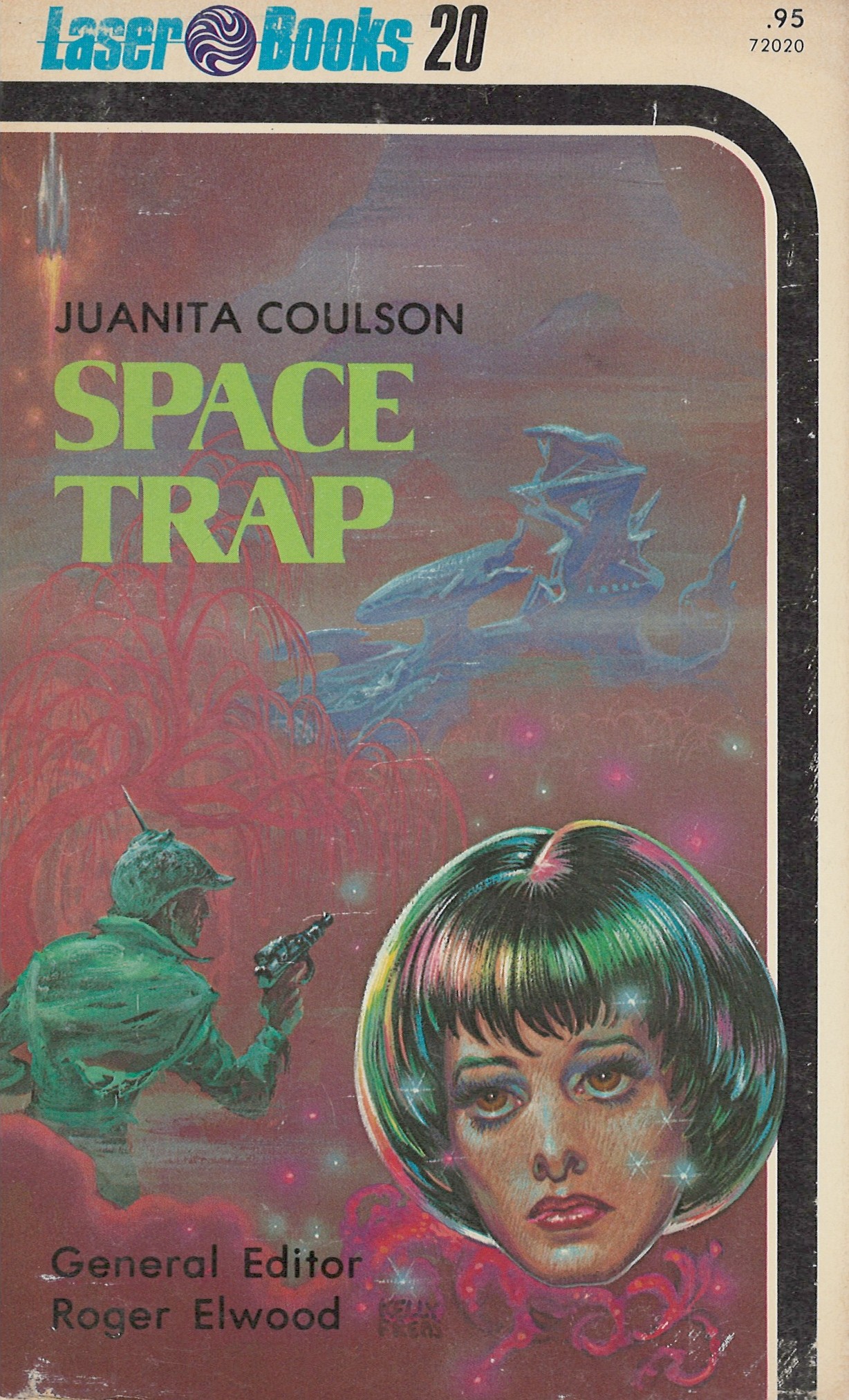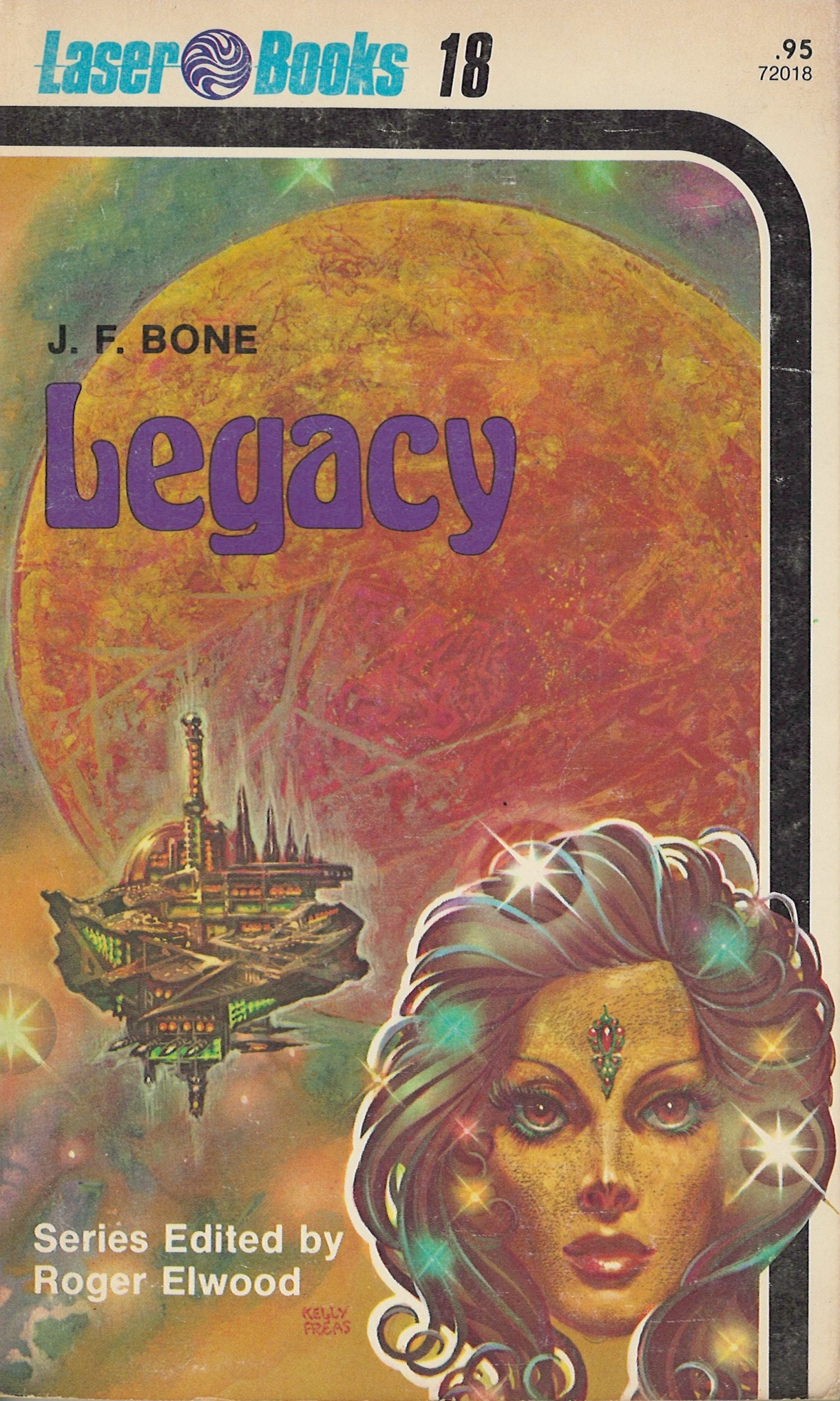
25. Scavenger Hunt by Stephen Goldin
If you scroll back far enough on Instagram, I’m sure you could find my posts from 2021 hailing Richard Branson, Jeff Bezos, and Elon Musk as visionaries and applauding the billionaire space race.
I’m not being sarcastic; there is–and I shit you not–an Instagram post I wrote where I called Bezos’s flight in New Shepard a “victory for humanity.”



Just thinking about it makes me want to scourge myself.
You have to remember, I was locked inside a house for over a year like the rest of you sorry schmucks quietly going insane with my family. Any distraction was welcome. So when this big pissing match between Bronson, Bezos, and Musk kicked into high gear, I tuned in religiously.
Mea culpa, mea culpa, mea maxima culpa.
Now I know y’all are intelligent people. You don’t me to tell you how all those long months spent stuck inside helped the far-right find more foot soldiers for its army of darkness, how ordinary folk turned into extraordinary bigots, how we silently allowed minorities to be exploited so that we could have food, drink, and graphics cards delivered to our homes while we rode out the lockdown in supreme comfort. It will be decades yet before we’ve fully recovered from the psychological injury of that time.
If ever.
I bring all this up because today’s Laser Book reminded me of the billionaire space race, and how such infinitely wealthy people succumbed to such infinitely petty displays of their wealth.


Stephen Goldin, author of the excellent Herds and the very good Caravan, delivers a third Laser Book today: Scavenger Hunt. I’ve thoroughly enjoyed his work in the series and am looking forward to diving into his latest novel.
And with the arrival of book 25, we now have an official bio from Roger Elwood for Goldin. Let’s see what he has to say about one of his regulars in Meet the Author.
Stephen Goldin has a bachelor’s degree in astronomy from UCLA. His first published story (at age 18) appeared in If; since then, his works have appeared in such diverse publications as Galaxy, Adam, Magazine of Horror, Pix, and Vertex, and in anthologies such as Protostars, Generation, Universe 5, Tomorrow’s Alternatives, Future Corruption and Nameless Places. One of his stories, “The Last Ghost,” was runner-up for a Nebula Award as Best Short Story of 1971.
As an editor, Mr. Goldin has assisted David Gerrold with four original sf anthologies as well as publishing one of his own–The Alien Condition. One of the stories in the latter collection won the Nebula Award in 1974. He has also worked as editor of a nationally distributed underground newspaper.
His background includes a stint as a restaurant busboy, managing a grocery store and working as a space scientist for the United States Navy. He is married to fellow Laser author Kathleen Sky.
OTHER LASER BOOKS BY STEPHEN GOLDIN
NO. 2 HERDS
NO. 8 CARAVAN
Gotta give an obligatory shoutout to David Gerrold, with whom I’ve had the great good fortune of being published. Our stories appeared together in the July/August 2025 issue of Analog.
His story was the standalone anti-slavery piece, “North Station Blues”.
Mine was “ESRI”, the second installment in my critically-acclaimed Europa series.

Would You Like to Know More?

Among his many prose credits, he is also a screenwriter, contributing to Logan’s Run, Superboy, and Babylon 5–the latter in which he wrote one of the most gut-wrenching sci-fi teleplays I’ve ever seen: the first season episode “Believers”.
But he is perhaps best known for Star Trek S2E15, “The Trouble with Tribbles”.
My grandma had a 30th Anniversary of Star Trek boxed set of VHS tapes containing “Tribbles” and the Deep Space Nine episode “Trials and Tribble-ations”. Every time I visited her, the first thing she’d do is sit me down in front of the TV, warm up a box of Michelina’s macaroni and cheese, crack open a Coca-Cola, and put on these two episodes. For an hour and a half, I’d be delighted by some of the best sci-fi television ever aired. To this day, I get the warm and fuzzies every time I watch these episodes.
And it’s all thanks to David Gerrold. It was a highlight of my career to share page space with him.
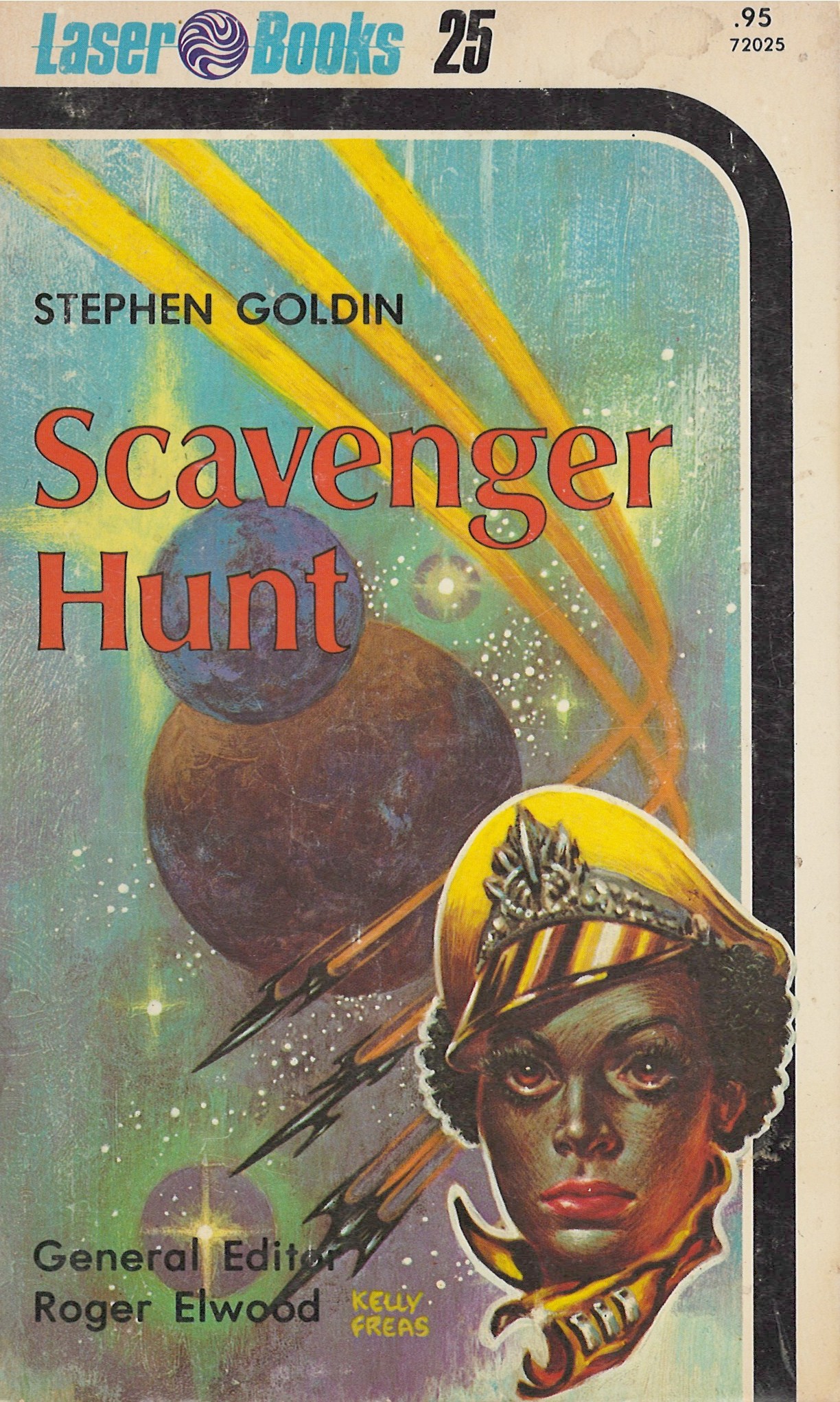
As I mentioned in my last review, I was very keen on talking about Kelly Freas‘s cover for Scavenger Hunt, so without further a-dew, let’s get to it!
Cover

Mm-hmm!
Kelly has played with a number of primary colours in his cover designs over the course of the series, the most frequent being green, red, and blue. This is the first time gold has taken centre stage, and damned if it isn’t pretty!
Right away the eye goes to the portrait of Tyla in the bottom-right and her glorious golden cap’n’s cap and command collar. If I ever get launched into space, this is exactly what I want to wear.
And my goodness, have you noticed Tyla is black?! This is terrific! Our first black female protagonist of the Laser Books! What a triumph! I know I harp on the Laser Books a lot for often being backward, but cheers to Stephen Goldin for finally showing his fellow authors the way.
As for the rest of the cover, two words come to mind: simple elegance. The trails of the spaceships mirror the gold colouring of Tyla’s uniform and the three spaceship hulls almost match the shade of her hair. Those ships by the way are the Honey B, Hermes, and Egalité, more on which later.
The planets are aligned so that they draw the eye up from Tyla (hard to do, I know; she’s gorgeous) to the title, written in a shade of red that hints at blood.
Hmm…
Anywho, onto the blurb.
Blurb

The SCAVENGER HUNT is the most deadly game in space. Tyla deVrie means to win it–no matter what the cost–and the beautiful Tyla is accustomed to getting her own way. But when the Scavenger Hunt exerts its macabre influence and exacts its toll, even Tyla’s indulgent world begins to turn sour. From the eve of the Hunt, when she is publicly humiliated at the glittering Hunt Ball and throughout the reckless race through space, her personality undergoes a subtle but sinister change–of which only she is unaware.
Whoa, Marketing Guy’s cooking on gas today! This is easily one of the more engaging Laser Books blurbs, and I could see myself thumbing through the first few pages of this title in a bookstore on the basis of the blurb alone.
Moreover, this premise feels like it could fit just as easily into a fantasy or dark fantasy tale as well. It’s so open-ended, you could go anywhere with it!
Not much more to say on this, really, except… give me the story!
Story
We’ve been catfished!!

This woman, depicted so prominently on both covers in a place typically reserved for either the protagonist or antagonist of the book, and who is mere millimetres away from the blurb on the back cover which makes specific mention of the protagonist Tyla deVrie and whom we would most likely assume to be Tyla deVrie…
… is not, in fact, Tyla deVrie.
It’s Kirre, captain of the Honey B, employee of the white female protagonist’s white male brother.
“We’ve been tricked, we’ve been backstabbed, and we’ve been, quite possibly, bamboozled.”
— Sarge, Red vs. Blue
We were so close–so effin’ close!–but no, this will not be our first black female protagonist. Kirre appears a few times throughout the book when buttons need to be pushed or exposition delivered, and even though she takes a strong moral stand at the story’s climax, it doesn’t redress the fact that she’s a secondary character.
Come to think of it, she might be the least-significant character in a Laser Book to get a cover portrait. So, that in itself is odd, but it gets even weirder when you consider that the protagonist of the story is female; naturally, after reading the blurb, I assumed the woman on the cover was the protagonist.
Nope.
I gotta say, the narrowmindedness of the Laser Books is really starting to chafe. I know that white male protagonists have dominated literature since… forever… but I have to reiterate: the LB’s came out 1975 to 1977, at the absolute crest of the New Wave. This was a time when black protagonists, female protagonists, and even transgender protagonists were breaking into mainstream stories. And readers loved them! Across the Laser Books, so far the only female protagonist has been Kate in Blake’s Progress.
And the only protagonist from a visible minority was Juan in The Star Web.
So, I can’t figure out why Kirre is on the cover. Did Kelly feel he needed to include more BIPOC faces on his covers? If so, good on him for looking for opportunities like this. The only other possibility is that he was told to put Kirre there as a bait-and-switch, and I cannot countenance the notion that Roger Elwood would do such a thing.
There’s one more problem: based on the amount of screen time each character gets, I would argue this book is an ensemble piece. If Tyla is the protagonist, her time spent on-page doesn’t really reflect that; Bred, Johnathan, and the all-female crew get just as much.
As for the story… it’s a phenomenal premise.
In the far future, billionaires have grown so wealthy that ordinary work and pleasure provides no satisfaction. They’re also the only private citizens wealthy enough to own their own spaceships, so travel between worlds becomes their primary means of distracting themselves.
But even this loses its lustre after a time.
Craving a new form of entertainment, they create the Scavenger Hunt, which is just that: an interstellar search for items of extreme rarity. It’s a lethal game, taking them to some of the most dangerous places in the galaxy. The items required are unique to each hunter, and some can go the whole Hunt without ever running into each other.
The Hunt is hosted once every twenty years, and seven total have taken place to date, four of which have been won by the deVrie family.
Tyla and Bred deVrie lost their parents in the last Hunt. They ran into some trouble pursuing a dragon’s egg on an alien planet. The other hunter who was there, Ambic Jusser, chose not to help them and fled with an egg of his own, causing them to die and going on to win the Hunt. Now, twenty years later, Tyla deVrie hopes to avenge that loss by winning this Hunt.
Tyla is a wonderfully messed up character. She’s what happens when being the Cool Girl in high school becomes a career path. Tyla has matured into a cutthroat socialite who uses sex as a weapon and prizes image above all else. She wants to enter the Hunt herself, but the rules say only men are allowed to. All her life, she’s had to manipulate men into opening the doors of high society to her. She has no moral compass, no sense of humanity, and no resilience of any kind.
Bred deVrie, Tyla’s brother, owns his own spacecraft. He’s a walking HR violation: he employs a crew of only women, regularly sleeps with all of them, and is indifferent to the Hunt. But, he enrolls his ship, the Honey B, at the behest of his sister because he cares about her happiness, and beating Ambic Jusser will make her happy.
In addition to Jusser, the android Johnathan R has enrolled the Egalité in hopes of winning the Hunt in order to gain prestige and recognition for androids as their own species. All the other participants take a dislike to him, especially Tyla after he stiffs her on a dance at the Hunt Ball, but he seems to be the only person who’s into the Hunt for reasons other than popularity.
The Scavenger Hunt
The rules of the Hunt are simple:
- Every ship is accompanied by an Umpire: a tamper-proof robot who announces objects to be collected
- Each item must be collected before the next will be announced
- Collecting every item on a hunter’s list means automatic victory: barring that, the participant with the most items wins
Notice how there are no rules governing the conduct of hunters toward each other. Fucking each other over is all part of the game, you see, and none fucks as hard as Ambic Jusser.
Not only did this tosspot leave the deVries’ parents to get eaten by dragons, he also helps an alien race hijack the Honey B, and attempts to murder Johnathan R by torching him with the Hermes drive plume.
(Fortunately, our android friend has thicker skin than your average schmuck.)
As the story progresses and the competitive bullshit piles up, Bred and Johnathan start having second thoughts about participating in the Scavenger Hunt. The first item is hazardous enough to try and get–an artificial dream from a planet where the inhabitants killed themselves by entering dream machines and never leaving–but the story really gets interesting on the planet Eclipsiascus.
Eclipsiascus is divided between two races: the aquatic Lithuwaan and the terrestrial Grosstem. These species are at war with each other, but neither can make any inroads into the other’s territory because the environments of land and sea are so different from each other; each species has a perfect home field advantage, but can’t fight effectively on the other’s turf.
Johnathan, Jusser, and the deVries are tasked with finding an Eclipsiascus flower which only blooms during this world’s monthly eclipses. Trouble is, the flower is growing in a warzone. The Lithuw promise to help find flowers for the contestants if the hunters will do one teeny tiny favour for them.
Use the drive plumes of their spaceships to incinerate the Grosstem population.
“We get genocide, you get flower. Good deal!”
Bred and Johnathan say no on the spot. Jusser says no as well, though not for reasons of morality: he simply believes that getting the Lithuw’s help would make the Hunt too easy. He craves the challenge of this game.
This is the moment when I realized the potential of this story: moral checkpoints that push the character’s closer and closer to the lines they profess they will not cross.
Risk your own life and limb? No problem. Risk your friends? Well, if they’re into it, sure. Hurt your friends? Maybe… Hurt a stranger? Well… Commit genocide? Um… I would’ve loved to see these characters pushed against that wall again and again with carefully calculated tests of their willingness to proceed.
Unfortunately, by kicking it off with potential genocide, Stephen doesn’t leave himself much room to innovate later on, and the story never quite reaches the heights it should.
It doesn’t even feel finished, come to think of it… it just sort of stops halfway through the plot.
Conclusions and Recommendations
IT’S A TWO-PARTER??

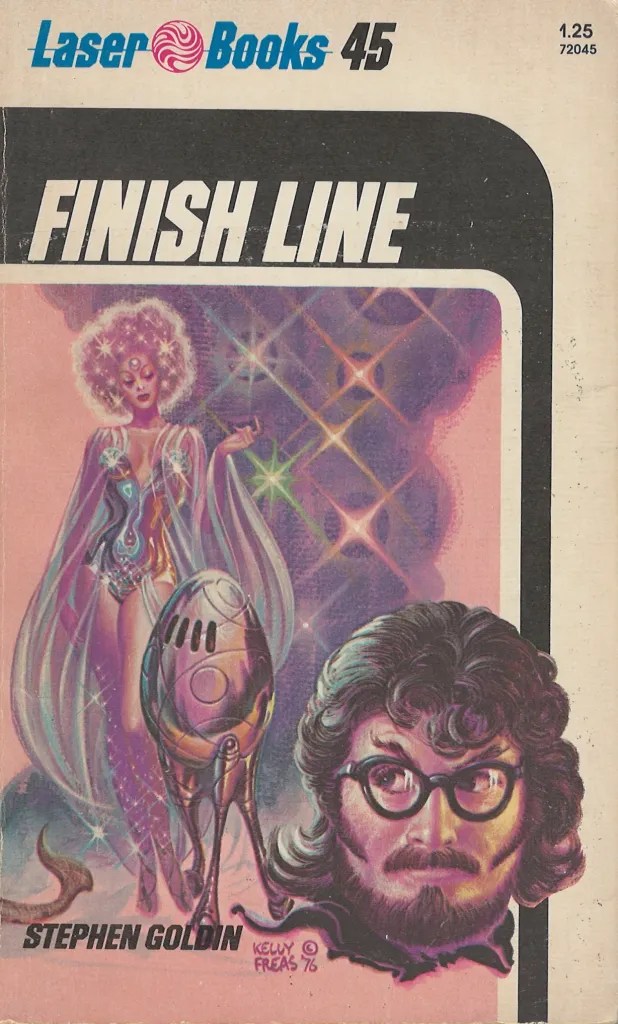
Yes, ladies and germs. I canna believe it, but I guess Roger Elwood agreed with me that a single book is not enough to contain this story. A full twenty titles down the road, he commissioned the conclusion to Scavenger Hunt in the aptly-titled Finish Line.
I wouldn’t have even known about it if I hadn’t checked the first book’s Goodreads page.
This Laser Books edition was originally published in 1976 and is only the first half of the complete story. (The second half was published later that same year as “Finish Line.”) Years later, the two halves were published in single-volume form under the comprehensive title SCAVENGER HUNT; the paperback edition was published by CreateSpace for Parsina Press, and the ebook edition was published by E-Reads. For a more satisfactory experience, read the later, complete edition.
Hang on, hang on, I need to do some calculations…
I wish I had a NASA supercomputer to verify these, but if I understand this correctly, at the current rate I’m working through these Laser Books, it’ll be 40 weeks before I read the conclusion to Scavenger Hunt.
But right now, I’ve got bigger questions.

How did Kelly Freas get a picture of my uncle from the ’80s… if he drew this in ’76?
Well… onwards we go.
My Goodreads Review
There’s a truly clever idea in this story, and for the most part, it’s handled with Stephen Goldin’s typical skill, but 190 pages is not nearly long enough to satisfy the demands of this ambitious plot. Apparently series editor Roger Elwood agreed, because he commissioned a second book from Goldin, Finish Line, to explore and conclude the story properly. I’m excited to read it, but as for this book… it’s hard to rate an incomplete tale. So far, I’d give it a 3 out of 5, with the real rating closer to a 3.5. If this story were told today, with more room to expand and dig deep into its subject matter, it might be a bestseller.
There’s truly so much potential in the idea of “billionaires on an interstellar scavenger hunt, screwing each other over every step of the way” that I think, if this story were expanded on, edited, and repackaged in a new format, it would be a colossal hit.
Something for me to think about…
And you know what else I should be thinking about?
Who’s Next?

Robert Coulson, one half of the writing duo that brought us the totally forgettable Gates of the Universe, returns with a tale all his own: To Renew the Ages. Hopefully this one stays in my head longer than the last one did.
Blurb
North America, after the nuclear holocaust, is a hostile and desolate land–populated by tribes of barbaric savages and ferocious wild animals. From one of the few widely scattered settlements, Bill Ashley rides onto the Deadlands, searching for a chilling, unknown enemy that lures its prey by telepathy. Instead, he finds Tamara Bush, the most beautiful woman he has ever seen. She considers him beneath contempt. But if she is ever to see her home again, Tamara knows she must accept Bill’s protection.
Something tells me it will not.