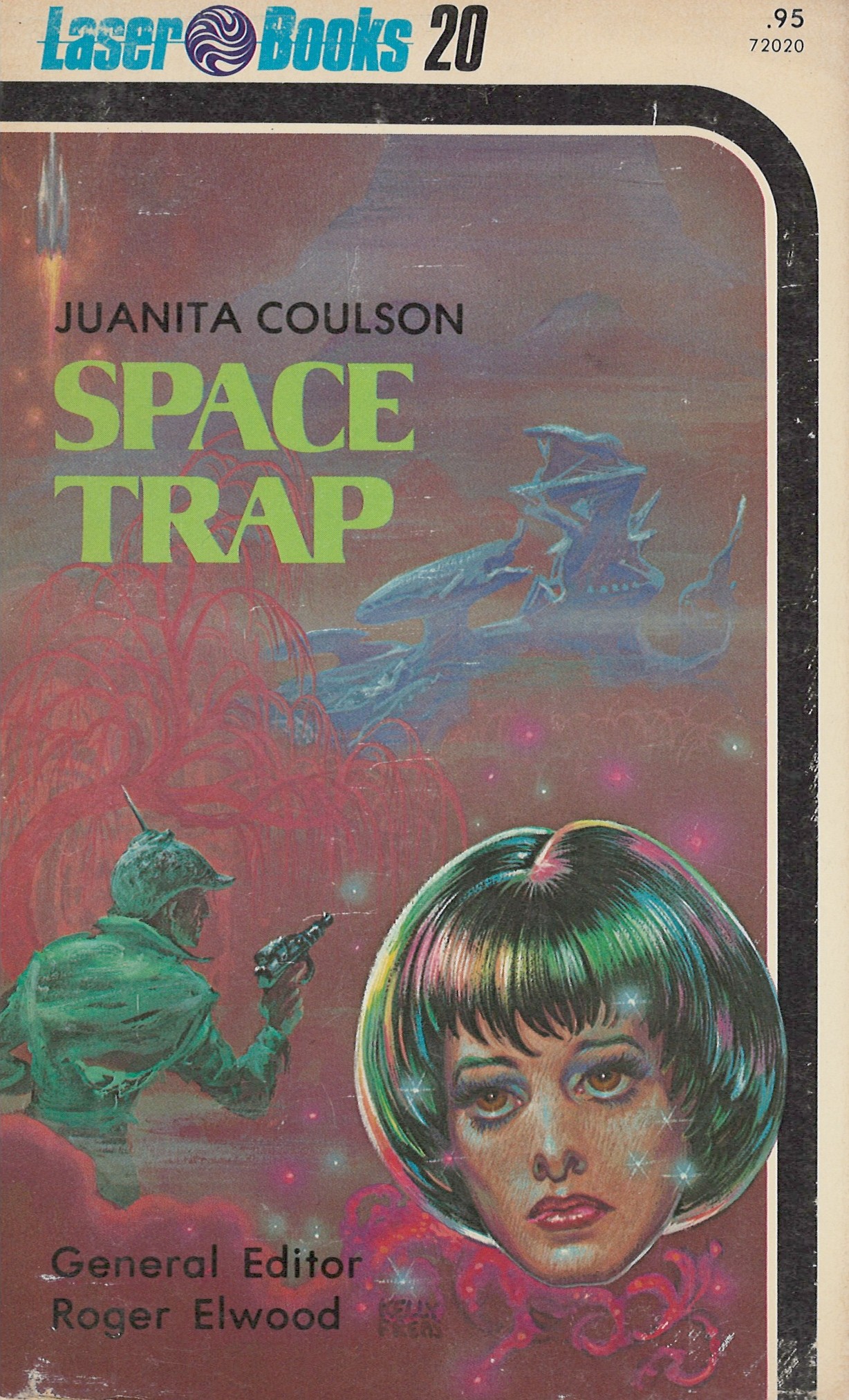
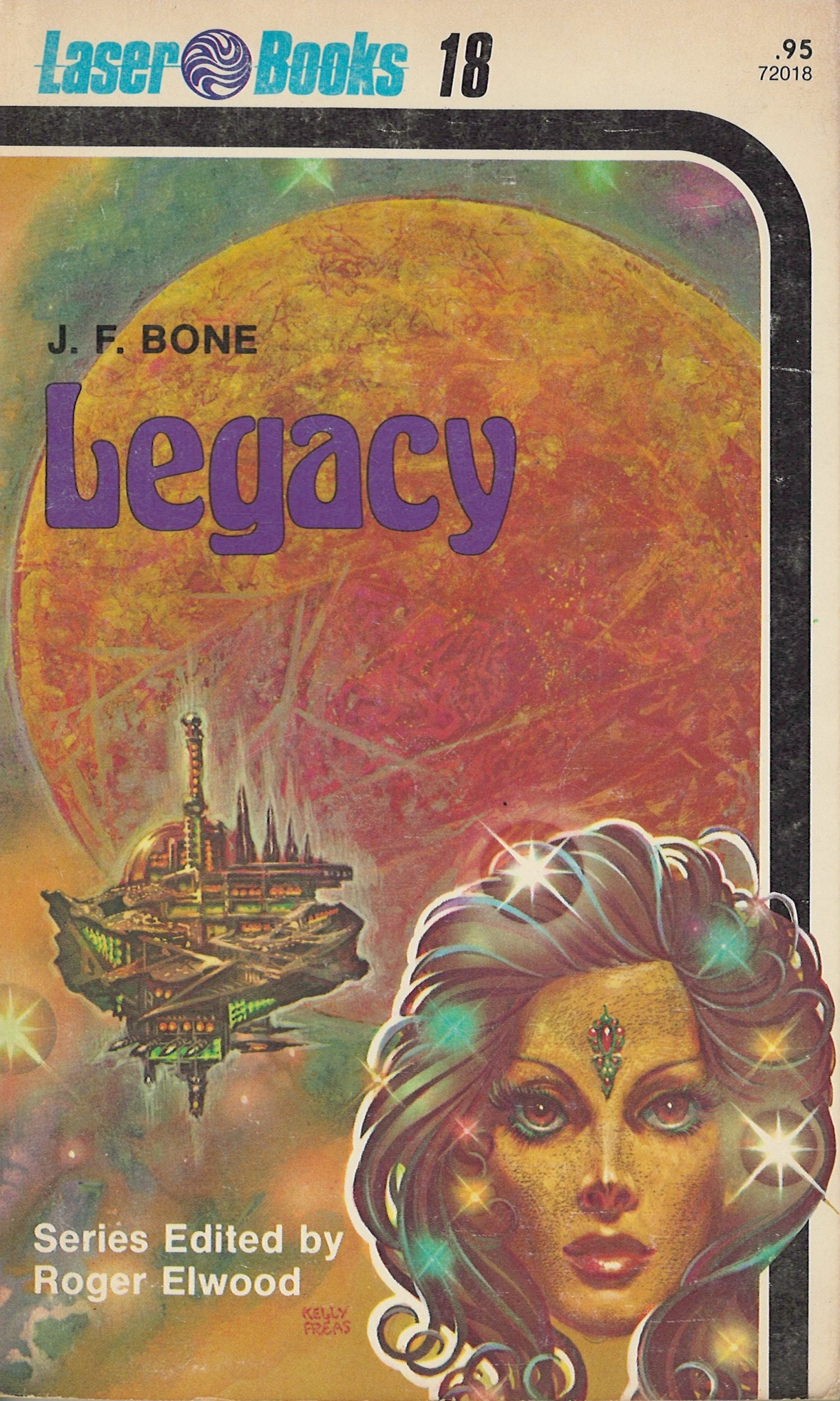
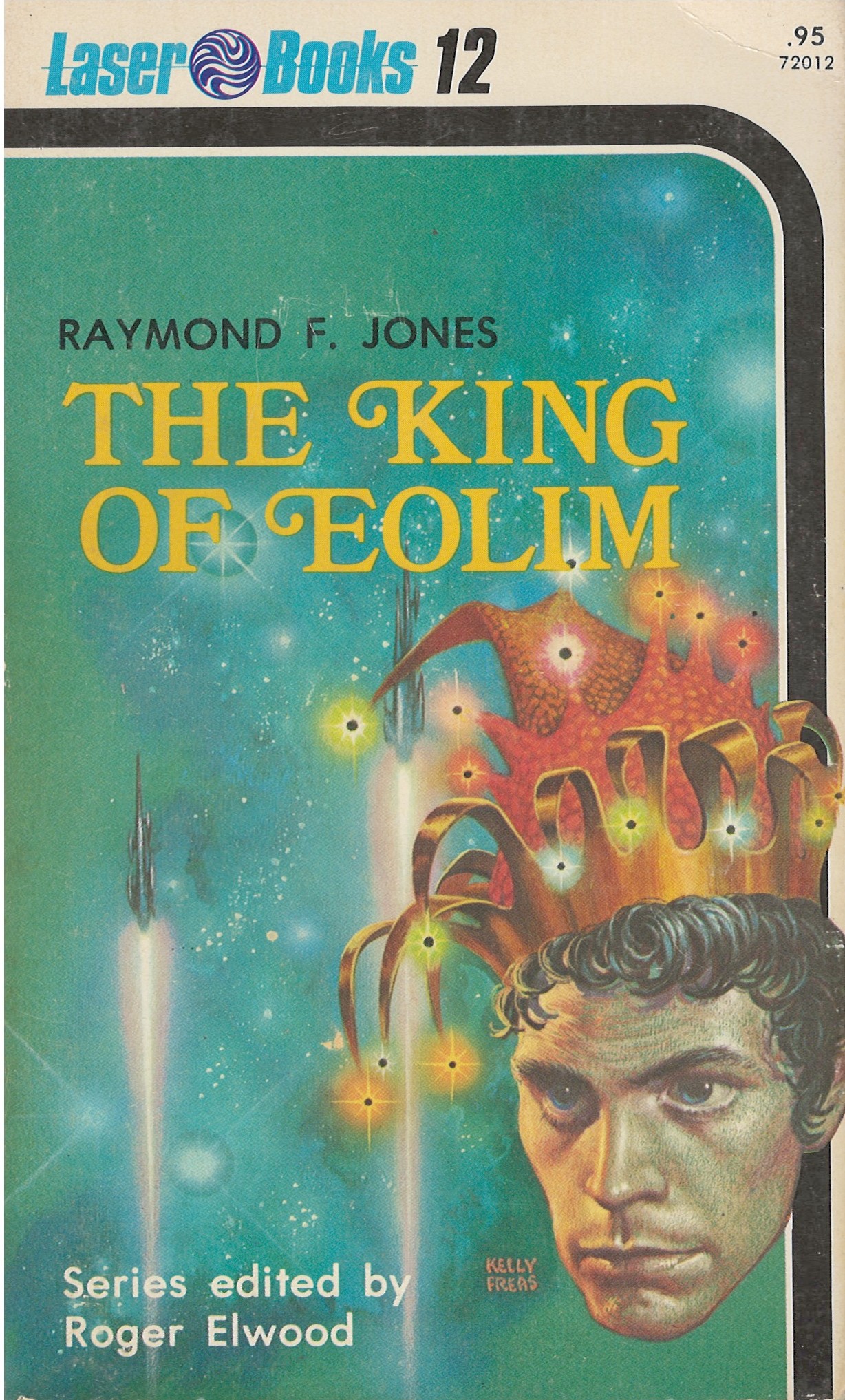
21. A Law for the Stars by John Morressy
I’m often asked, especially after installments like our last entry from Juanita Coulson, “James, why do you continue to torment yourself reading what is largely a very mediocre series of science fiction books?” And my answer is always the same.
“For the memes, of course.”
But memes aside… as I’ve repeated ad nauseam, there are gems among these books; stories which, despite their Golden Age-revival trappings, truly do speak to the world we live. I would endure all the shit books again if it meant I still got to read Serving in Time, Invasion, Birthright, and Unto the Last Generation. Some of these stories have inspired me, some have made me think, and some have changed my approach to writing science fiction.
And now, with the Blackjack(et) of the Laser Books, I’m delighted to say we have yet another winner.


John Morressy’s bio, courtesy of Roger Elwood and the Laser Books.
John Morressy was born in Brooklyn, N.Y., in 1930. He published his first story in 1952, and has been writing ever since: novels, novellas, juvenile literature, stories, essays, fables, poetry, verse and reviews.
A Law for the Stars is his first LASER BOOK but it is the ninth book he has had published. Of these, six have been science fiction novels. He plans to write a good many more, for he finds that science fiction is a pleasure to write and it offers him the chance to work with themes that don’t fit easily into works with a contemporary setting.
If there is a single theme running through all his work, he hopes it is the belief that the world would be a more pleasant place if we could accept the fact that killing each other is not an effective way of solving our problems.
I love the term “juvenile literature”. I think I’ll use that to describe my work more often.
And I fully agree: science fiction is a pleasure to write because it offers possibilities not constrained by the reality we live in, thereby allowing us to examine reality from the outside, objectively and without dogma to hold us in check.
(This is me foreshadowing the content of this review.)
I have to say that I was not encouraged by the wording of the theme of his work. There’s a rule they teach you in creative writing school (one of the few lessons I actually agree with): don’t choose simple, childish themes that are obvious to everybody. That third paragraph felt like a warning.
But I immediately overlooked it in light of what I saw on the title page.

Whoooo! Ladies and germs, we have a new first in the Laser Books: a surprise signed copy!!!
*Blows party horn*
This might be one of the few signed copies of the Laser Books signed by the original author. I can’t imagine these novels (or their authors, I’m sorry to say) were popular enough to warrant many signatures.
I might be the only man on Earth who has a signed copy of this exact book… That’s a scary thought. This might put a target on my back.
And for the authors who did make it big, they have other works far more popular than whatever they turned in to the Laser Books that are deserving of signatures. For example, if I’m going to get a book signed by Tim Powers, am I going to take The Skies Discrowned (later published as Forsake the Sky), or am I going to take a chart-topper like The Anubis Gates, or Last Call, or On Stranger Tides, or The Stress of Her Regard?
Um… actually… maybe not The Stress of Her Regard. The ghost of Mary Shelley would probably cut my balls off.
Would You Like to Know More?

I first discovered Tim Powers through the Treasure Chest which contained the other Laser Books. I plan to do a post about them once I finish reading the last of the titles which were included.
I think we’ve dallied enough, let’s get this review started.
Cover

I really love this cover. It really brings a wave of nostalgia.
Growing up with the late 90s, early 2000s Star Wars games, I got to see a lot of really cool science fiction character designs. Some of my favourites were actually the characters who were not human, but shared a lot of the same models and textures. Maybe they were coloured blue, or pink, or green, but other than that, they weren’t very “alien” looking.
I think that’s what I liked about them: they were mostly recognizable as people, but there was just one or two odd things about them.
I’m getting those same vibes here.
I believe the man in the portrait is Thone, one of two characters who take our protagonist Ryne into the Sternverein Security forces. He’s got so much character in his face! The blue-black skin, the smirk, the world-weary eyes, the red ascot–you can tell this guy has been places. He could be a cherished uncle or brother.
His cheerfulness is undercut by the shadowy figure behind him. This might actually be our protagonist, Ryne, but he’s not wearing any medals or commendations that I can see (an important aspect of adult Ryne’s character), and he looks a bit like Thone’s race, so it might not be him. Either way, it’s one of Kelly Freas‘s best character designs in my opinion.
In the background, you’ve got a Sternverein driveship, and a collection of worlds which could be all the major locations in the novel, or simply one planetary system with two moons. Kelly arranges all these spacey elements vertically and backlights them with a river of stars to fill the negative space.
This might be one of my favourite covers because, rather than simply capturing characters or moments from the story, it captures the essence of the story: a front of good cheer with the spectre of violence looming large in the background.
Looking at this cover, I feel like I’m being made an offer I can’t refuse.
This is why Kelly is a master of SFF covers: when he’s at his best, he pulls you into the story before you’ve read a single word.
Would You Like to Know More?
Oh! Before I forget… On the subject of signed Laser Books, I met a geezer at The Only Cafe a few months ago who actually had the entire Laser Books collection… signed by Kelly Freas.
Jealous-making!
But he also told me about a really incredible piece of animation that I’d like to share with you all, simply because there hasn’t been a better place to do it before now. If you watch Corridor Crew, you might be familiar with this guy. His name is Mike Jittlov, and his creation is “The Wizard of Speed and Time”.
Feast your eyes.
Let’s get onto the Blurb.
Blurb

The Sternverein polices the universe. Criminals dread it; law-abiding citizens esteem it; all respect it. Ryne, an orphan from the planet Jadjeel, worships it. The organization rescued him from slavery and trained him to be a man among men, an elite Blackjacket. It gave his life purpose and direction, excitement and adventure. But it is totally corrupt, as Ryne learns in the shattering episode that brings to a climax John Morressey’s sweeping odyssey, A Law for the Stars.
A great blurb! Marketing Guy, you aren’t doing too badly these days.
Stories of corrupt institutions have been popular for a long time, but especially now, as late-stage capitalism is deconstructed by intellectuals and artists.
But I have a particular fondness for stories of soul-searching in law enforcement (more on this later). Indeed, in most of the novels I’ve written, there is often a grey-haired mercenary, cop, or soldier who comes to a crisis which forces him to reexamine the system of power he serves. Sometimes that examination costs him his life, and sometimes he manages to redeem the institution to which he belongs.
We’ve had stories and blurbs many-a-time in the Laser Books of characters realizing they’re living under a dystopian society, so I wasn’t expecting much from Morressy. I was thinking this would be another run through Detroit.
I was wrong.
Buckle yer fuckles, boys and girls, this review is gonna be as sprawling as the Sternverein itself–but hopefully, more self-aware.
Story
Qiānggǎnzi lǐmiàn chū zhèngquán.
Political power grows out of the barrel of a gun.
— Mao Zedong
How does law enforcement gain the trust of people? A Law for the Stars posits that one of the most lasting and effective ways is a demonstration of force right at the time and place the people are victimized the most.
That’s how it goes for our protagonist, Ryne.
On his planet Jadjeel, the citizens have forgotten that they once came from another planet called Earth, so they’re quite shocked when one day, visitors from the stars arrive, give weapons to a rival clan, and march together on the cities, killing and pillaging as they go. Ryne’s parents are killed and he finds himself alone on the streets of a city now ruled by bandit lords.
In his quest to survive, Ryne accidentally kills an otherworlder who was trying to rob him. This scene is handled with such simple cruelty: when Ryne tries to stop the thief, the thief slaps him and goes back to rummaging through Ryne’s pack, as if Ryne is expected to know his place. It really gets your blood up, and you’re quite happy when Ryne greases the schmuck.
Afterwards, fearing he’ll be made into an example, Ryne flees and falls in with two other otherworlders: a blind seer named Thone and his companion Varyssa. They take Ryne in, ostensibly because he has nowhere else to go, and Thone uses his “talents” to worm his way into the court of the Overlord, a star-borne renegade on the run from men and women called “blackjackets”.
That night, Thone and Varyssa murder the Overlord and his cohorts in their sleep, and reveal themselves to be members of the Sternverein–the blackjackets the Overlord feared.
But who are the Sternverein?
Bad Men with Badges


Sternverein Security is the military arm of an interstellar trading empire.
After humanity expanded to the stars, human beings diversified into many phenomes, and that’s before alien civilizations were thrown into the mix. The nature of FTL in this universe mandates that only small arms can be carried aboard interstellar starships. If you try to go superluminal whilst carrying, say, a particle cannon or nuke, the FTL field collapses and the ship explodes.
With no direct link to Earth, no central government to keep order, and only small weapons being available, a class of pirates, bandits, and warlords took power over multiple systems, preying on those who couldn’t defend themselves.
In order to protect commercial vessels plying the shipping lanes, an alliance of merchants created a force of armed traders who eventually became the Sternverein Security forces.
Officially, its role is to police the stars, hunting down pirates and despots, and keeping merchants safe.
Unofficially, the Sternverein engages in the assassination and genocide of anyone it deems undesirable, and it has a hierarchical system that prizes racial purity. (They have a numerical scale for how close a person is to “Earth basic” genetically.)
The only difference between a police force and a gang is a badge. So long as the state has the monopoly on force, it can–and often does–allow its peacekeepers to get away with murder.
There are many historical precedents for the Sternverein: ICE, the Presidency Armies of the East India Company, and the Gun Trace Task Force of Baltimore, but the comparison I believe is most apt for the Sternverein is Spain’s guarda costa (“coast guard”) which operated in the Caribbean throughout the Golden Age of Piracy.
In the late 17th and early 18th centuries, Spain had a real problem with piracy. Anybody with a canoe and a gun could, and often did, raid Spanish possessions. It didn’t help that rival powers, jealous of Spain’s wealth, gave permission for their own captains, whether military or commercial, to plunder Spanish holdings at gunpoint.
Spain’s Navy didn’t have the numbers to protect its assets, so it began issuing letters of marque and reprisal to captains of armed traders, empowering them to search and seize any vessels heading into or out of the Caribbean. With these licenses in hand, the guarda costa proceeded to conduct a campaign of terror against pirates and honest merchants alike. They would torture, rape, and kill whomever they wished, and even if you somehow escaped with your life, chances are good they’d still rob you of your cargo, fence it, and burn your ship.
The guarda costa were pirates, but pirates armed with badges and licences as well as guns and sabres, so they were considered legitimate, at least by their own government.
The Sternverein’s modus operandi is explained early in the novel:
“Remember, our primary mission is execution. We fight only if we must. This is not a tournament–we’re going after outlaws condemned by the Court of Mercy. If you can kill them in their sleep, do it. If you can kill them when they’re unarmed or after they’ve surrendered, do it. Kill them and everyone who sides with them, including women and children. You won’t be killing humans, you’ll be ridding the stars of an infection. You’ll be helping to build a future that promises safety and security for people who have no other protection but our strength. This is what you trained for. Do it right and you’ll stay alive and all the civilized worlds will benefit. You’re the deadliest weapon in the galaxy–a Sternverein Security trooper. Be a good one. That’s all, Ryne. You’re dismissed.”
— Pg. 54-55
I can easily imagine such lessons were given to the Sturmabteilung and Hitler Youth regarding the Jews, or to the Israeli Defence Forces regarding the Palestinians.
And one page later:
The simplest, most basic weapon of all was the trained professional warrior.
— Pg. 56


That is true.
What’s also true is that for most of history, those trained professional warriors maintained their status through the brutal subjugation of anyone who threatened their power. Thus it is with the Sternverein.
Ryne
Having seen the efficacy of the Sternverein, and been promised the chance to join them, Ryne becomes one of the most zealous and effective troopers the organization has ever known.
The reason this book is such a treat to read is because, as the reader, we know how fucked up the Sternverein is from the word “go”, but it’s so interesting to see Ryne fall in love with them because we’ve seen what happened to his family. He has legitimate reasons for wanting to be in law enforcement: they killed his family’s murderers and gave him shelter when no one else would.
As a middle class white boy with a suburban upbringing, my parents drilled one lesson into me over and over again: “No matter what happens to us, you can always trust the police.” And for me, that was true; being straight, white, and male pretty much guaranteed the police would be on my side for life. I grew up a rule-follower, with a healthy respect–even reverence–for authority.
It wasn’t until I dated my first partner in college, a black woman, that I realized what held true for me didn’t hold true for everyone.
She had a problem with a stalker and I repeatedly urged her to talk to the police. To which her constant refrain was, “I don’t trust the police, and they don’t trust me.” I never got it through my head that for her, the police weren’t necessarily friends, and it was purely down to the colour of her skin.
I would like to say that I know better now, but the truth is I still view law enforcement with rose-tinted glasses. In the past, I’ve gone out of my way to give witness statements to the cops on car accidents and assault cases.
I cannot imagine I would ever lie to a police officer.
That trust is magnified a thousandfold in Ryne, and cemented by the use of drugs. The Sternverein keeps all of its officers on Nolo while in service, a drug which suppresses emotion and sex drive and quietens conscience. It makes troopers more effective killers.
Troopers are always given the chance to come off Nolo during their R&R, but over time, many simply choose to remain on the drug permanently. These men and women are not machines; on some level, they know that what they’re doing is wrong.
But as long as they don’t have to feel their guilt, they can get on with the job.
Ryne comes off Nolo for the first time and instantly begins to regret the lives he’s taken. He confesses this to his romantic partner Keela, who consoles him with these words:
She placed her hands on his shoulders and looked at him intently. “Ryne, you’ve been talking about killing. But you’re a blackjacket. You don’t kill. You’ve never killed anyone yet, and you never will. Your purpose is to locate and eliminate dysfunctional components, and you do it superbly well. You’re a good man, Ryne–you know your purpose and you fulfill it. That’s why I love you so much.”
— Pg. 98
Dehumanization is a necessary first step in genocide.
Ryne earns the Order of Leddendorf, the highest commendation of the Sternverein, for his actions on a mission gone bad. He is often cited as the most proficient soldier in the organization, and is given increasingly higher levels of trust.
But predictably, it all comes crashing down.
The Endgame
The goal of the Sternverein is to cleanse the stars of pirates, renegades, and bandits–to Make the Galaxy Safe Again.
And for the most part… they succeed.
But as the last pirate strongholds are purged and the grizzled old Sternverein troopers retire, a new class of asshole takes power. These pencil pushers haven’t the guts to undertake dangerous missions and would prefer to just glass troublesome worlds from orbit. They draw even less distinction between rebel worlds and worlds that simply want to be left in peace than the Security forces do.
And they are learning to build uncrewed bombships to that purpose.
John Morressy pulls such a clever bait and switch on the reader. He convinces you that Ryne and his ilk are the worst thing in the universe, and then shows you that there’s still further for humanity to sink. Ryne, for all his faults, still has a code he adheres to, as twisted as it may be.
The people rising to power in the Sternverein now have no code at all, save greed.
And we come at last to the climax of the book. During a routine diplomatic mission to a supposedly primitive world, Mog Korb, Ryne partakes of a hunting ritual where he eats the heart of a wild animal. The Sternverein have explicit rules against eating local food, ostensibly because it might carry diseases for which they don’t have cures, but if you know a little about human biology, you might have guessed the real reason for this taboo.
Ingesting food stimulates the body’s metabolism, speeding up the breakdown of molecules in the bloodstream… including drugs.
Drugs like Nolo.
That animal heart carries enzymes which breaks down the Nolo in Ryne’s body, causing him to experience heightened emotion for the first time in years.
Ryne had never lost his curiosity about the great variety of human life forms found among the stars. As a boy in Jadjeel, he had seen all otherworlders as brutal enemies until he met the ones who saved his life and freed his world. An Agyari and a Mallelan were his first heroes; Seadhal the Thorumbian was the finest trooper he had ever known. Since his first space duty, most of his friends had been part of the Old Earth blood, it was true. That breed was predominant on nemesis runs. And the nature of his duties brought him in contact with only the worst of every galactic race. But despite all the experiences that might have led him to see every alien as a deadly enemy, the force of those early impressions was great. It had created a lifelong interest in alien races and cultures, an interest Ryne had pursued even when his superiors gave him no encouragement. Now he was grateful for the long discipline.
— Pg. 135
Free of Nolo, Ryne begins to empathize with the Korbians. He tells them about his experience with Nolo, and why troopers are forced to take it.
Milam looked at him as if seeing someone new and fearsome. “You make yourselves less than men, less than women. You are not human!”
“We sacrifice something, for a time, in order to gain the discipline that keeps us alive. Our discipline has made us the greatest power in the galaxy, and we’ve used that power for the good of all human races,” Ryne said.
“This is not discipline, Ryne,” Milam said vehemently. “Discipline comes from within. It is freely chosen. You are slaves.”
— Pg. 160
But it’s more succinctly stated twenty-two pages later:
The Sternverein, for all its proud boasts and imperial dreams, seemed to fear normal humans reacting in a normal way.
— Pg. 182
When Ryne discovers that a shadow mission has been deployed to Mog Korb–forty-four blackjackets sent to train a rival tribe in offworld firearms–he realizes that he was wrong about this organization which saved his life and took him in.
This is Jadjeel all over again, only this time, it’s being perpetrated by his found family.
Turns out the galaxy is getting sick of the Sternverein. Some worlds are banding together to form their own defence league against the blackjackets. There are also signs the Sternverein is about to collapse: the reason they’re interested in Mog Korb is because the planet is abundant with a critical element used in the construction of faster-than-light driveships. The ships used by the Sternverein are on their last legs, and once they break down, the blackjackets will have no vessels capable of carrying them across the stars.
Moreover, the new leadership’s gambit of building bombships can only work with an influx of the element. Without that, the plan falls apart.
Ryne’s actions on Mog Korb might have saved the galaxy from several generations of tyranny.
I would like to close this portion of the review with a short piece of dialogue from Battlestar Galactica. It comes shortly after humanity finds itself on the run from the Cylons. President Roslin asks Commander Adama for his forces’ help in keeping order amongst the refugees.
Conclusions and Recommendations
The brilliance of this novel is not that it says anything new; rather, it shows us how a person can become indoctrinated into trusting a system of authority with their whole heart, and the extreme measures that must be taken to deprogram that person.
Ryne is a simple character, but the truth is, there are millions of people like him around the world: people whose lives were saved by a powerful entity, and who now put their faith in that entity. It’s so easy to become enamoured with authority when authority exercises force in your defence. What is obvious to the reader is not obvious at all to Ryne, but Morressy’s strength is that he helps you understand where Ryne is coming from.
Flawed as he is, misguided as he is, Ryne’s story could be mine.
My Goodreads Review
An insightful deconstruction of law enforcement, order, and justice, this novel is also a cautionary tale about putting one’s faith in systems of authority. It’s a reminder that, as dangerous as the world is, and no matter how badly people have hurt you, nothing should convince you to trade your freedom–or humanity–for security. I can easily recommend this novel, which is as relevant in 2026 as it was in 1976.
This book was a joy to read, pure and simple, and it belongs on a shelf with the other Laser Books that actually say something about the world we live in. Easy 4 out of 5. Perhaps even a 4.5. It is at least on the level of Serving in Time, in case the length of this review wasn’t a clue.
Sadly, we must now bid adieu to John Morressy for a very long time. We will not read his work again until Laser Book 52. The Extraterritorial. For now, we must turn our attention our next title, which represents only our third entry by a female author in this series.
Who’s Next?

Ooh, nice cover! Blurb me up.
Blurb
In this world of tomorrow is neither hatred nor love. Normal human sentiment is punishable by death! Dreams of happiness, human warmth and joy have given way to indifference. Man has been programmed not to feel. It is a chilling world in which there is no feeling at all, save fear…fear of any human emotion! This is the world in which Frederick Dainig must live. He told himself he couldn’t help it, but he knew better than to let himself care about the little child of whom he is the Keeper.
Wait a sec…
… is this Equilibrium?!
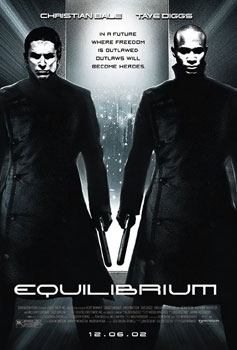
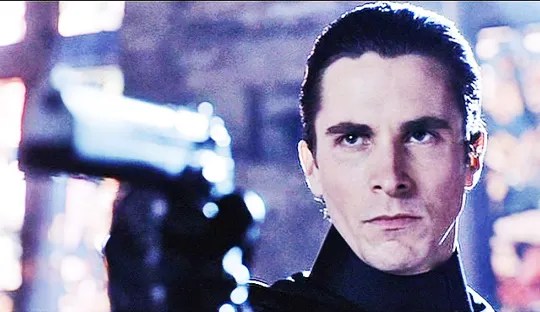
Shiiiiiit it’s been ages since I practiced my gun kata!