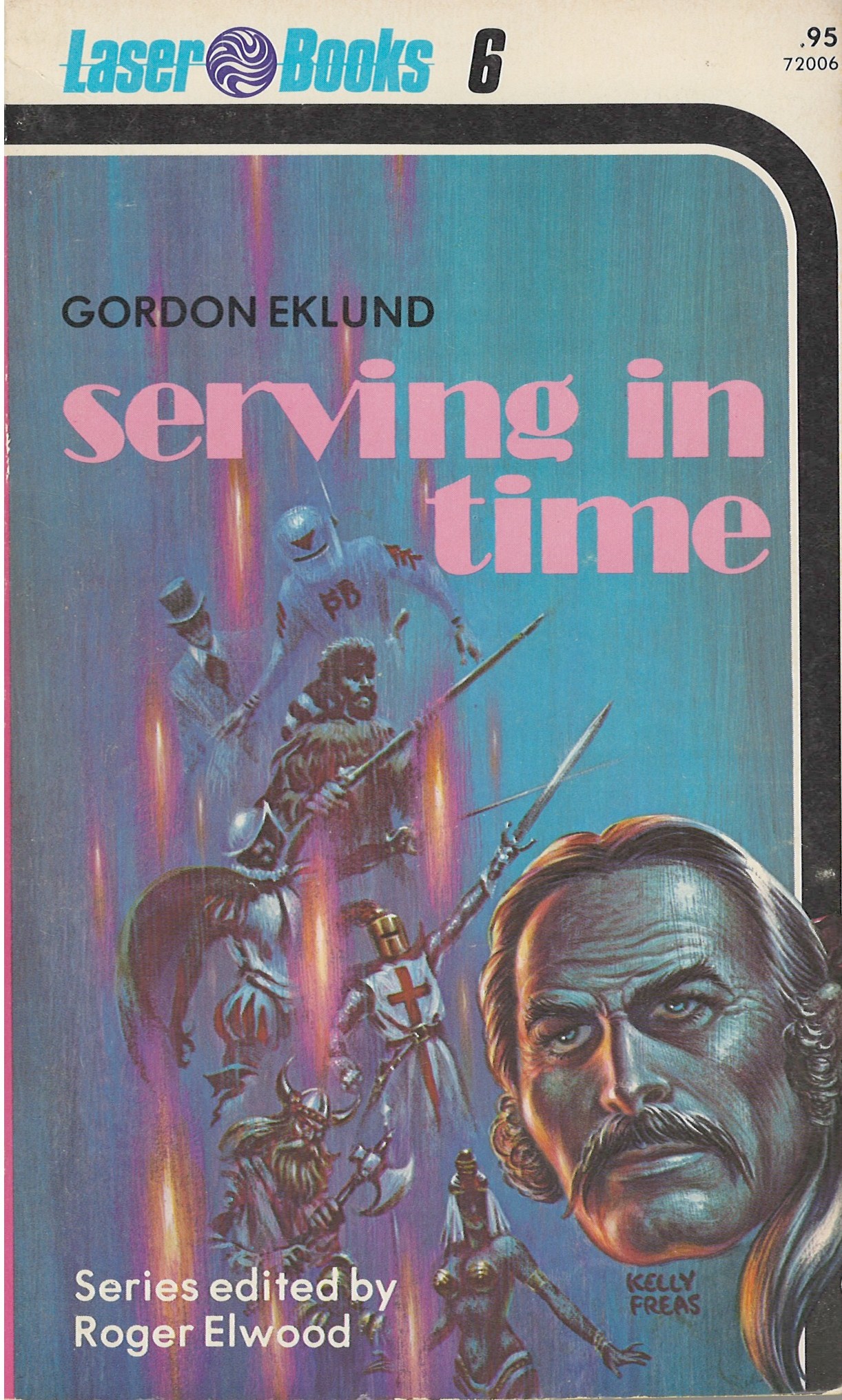
Month: February 2026

  • Laser Books Review 9

    Laser Books Review 9

    9. Invasion by Aaron Wolfe (Dean Koontz)

    Stay tuned at the end of this review for an important public service announcement regarding the Laser Books upload schedule!

    Sorry, I had to.

    At 4:30p.m., June 19th, 1999, a man named Bryan Edwin Smith struck Stephen King with his van and put him in the hospital. While he was recuperating, he wrote the novel Dreamcatcher, which is a story of a small rural community that comes under threat from alien lifeforms during a terrible blizzard. Most of the action takes place in a cabin. Dreamcatcher came out in 2001.

    Would You Like to Know More?

    Despite being a hot mess of a book, I actually have very fond memories of it. I read it in late December of 2017 while my grandmother, Doreen Dick, lay dying in Michael Garron Hospital. I needed to get out of my house and be alone after visiting her, so I’d hike a kilometer through the snow to a Tim Hortons on Warden Avenue, order an iced capp, and read the book for a couple hours while the sun went down.

    Even then, I knew it was not the best of Stephen King’s work, but it was a much-needed, low engagement escape at a time when I desperately needed one, and for that, I’m happy to have picked up the book when I did.

    Mid-winter — especially a bitter cold Ontario mid-winter — is an excellent time to read Dreamcatcher. As the dark comes early and the temperature plunges below -20 Celsius, the oppressive atmosphere of the book is enhanced. Try to find a beat up paperback version from a used bookstore and read it by a solitary incandescent lamp in a place where the wind keens tauntingly.

    Suddenly everything which seems silly in the book becomes quite a bit scarier.

    Stephen King and Dean Koontz are often mentioned in the same breath because they both work in similar genres (horror and suspense), are both incredibly prolific, and, by any metric, enormously successful. I remember discovering King in my teens, as most young writers do, but it took a while for his style to click with me.

    I didn’t discover Koontz until I read Invasion, which he wrote under the nom de plume Aaron Wolfe, and something struck me harder than Smith’s truck struck King.

    Invasion is Dreamcatcher.

    Or rather Dreamcatcher as it should have been.

    It was written in 1975.

    And it is Dean Koontz’s first novel.

    I actually could not believe Invasion was a Laser Book by the time I finished it. The quality is so high it could’ve easily appeared as a serial in any science-fiction or horror magazine at the time, or been published as a standalone novel by Ace, Del Rey, or Tor.

    Invasion is the equivalent an in-field home run for the Laser Books: we’ve had a few singles (Seeds of Change, Caravan), a few strikeouts (Crash Landing on Iduna, Gates of the Universe), a proper home run or two (Serving in Time, Herds), but now we have a play that is unbelievably rare and awesome, and just when you think it’s gonna get shut down, Koontz pulls it home.

    There’s literally no part of this book that isn’t incredible, and it all starts with the cover.

    Cover

    This is Freas‘s best cover yet, hands down. Why? He tells the entire story.

    First thing you notice is the protagonist in the portrait, Don, staring in bug-eyed terror at the skull in the centre-left, behind Roger Elwood‘s name.

    From there the eye naturally travels up to the alien invaders on the left, which are sketched with such simplicity while still being faithful to their description in the novel. I don’t know how Freas managed to make their claws so detailed while being so tiny. The eye roves over theirs, glowing and yellow, then up to the shattered doors of the farmhouse, then up to the huge snowball-shaped spaceship hovering over everything.

    This is literally the path the story takes: first you see the aliens’ leavings, then their eyes, then the home they broke into, then their ship. Freas visually describes the story to you the way Don witnesses it.

    But perhaps my favourite element of the cover is that blood-red title looming over everything. We’ve never seen a title with these rigid lines in the Laser Books before, nor one such an alarming and pure shade of red. At first I thought it was a military stencil font, like the kind you see stamped onto the Ark of the Covenant at the end of Raiders of the Lost Ark, but upon closer inspection, I realize that’s not it.

    The letters are composed of simple geometric shapes. Stare at any one of them for long enough, and it almost ceases to be a letter at all, and just becomes an abstract symbol. Like when you say a word like “refrigerator” ten times in a row and it loses all meaning and becomes a weird collection of sounds.

    The craziest thing is… this is an actual metaphor for the book’s plot! Don sees all the individual signs of the alien invasion around Timberlake Farm, but doesn’t recognize them for what they are because he isn’t stepping back and seeing the wider picture.

    Perspective, sightlines, colour, title font, Freas went above and beyond the call of duty with Invasion’s cover. As my girlfriend L. would say, “I have no notes.”

    Blurb

    Barry Malzberg says that Invasion “is simply one of the most remarkable first novels in any field that I have ever read.” The English critic, Philip Pollock says that it is “quite genuinely spine-chilling, well-written… with a twist to the ending which I like very much…” (but we can’t reveal the ending). He goes on to say that “in any collection of SF there has to be one tale such as this, and I think it might probably be difficult to find another one of quite this calibre.” Difficult indeed! Invasion is nothing less than a superb novel.

    Okay, listen.

    I know I harped on about Seeklight‘s usage of critic reviews on the cover blurb, but the reality is, I don’t think the hype for that book was deserved. It was competently written, but it’s plot was done better in the years before and since.

    Invasion, though… I’m pissed off as hell it doesn’t have a proper blurb, because that would be so easy to write. It could even be one sentence:

    Isolated on a rented farm during a terrible blizzard, a man fights to protect his family against the alien creatures prowling in the snow outside.

    However, this one time, I’m giving it a pass, because every word of praise for Invasion is deserved.

    In short, I would not be very tempted to read this book based on the cover blurb, which is a crime on Marketing Guy’s part because I would’ve missed out on — yes, I’ll quote the blurb — “nothing less than a superb novel.”

    Of course all of this is preamble to what I really want to tell you about.

    Story

    Don is a discharged Vietnam veteran working through the trauma of his terrible time in that war. He’s rented the Timberlake Farm in New England (no, down, down, Stephen! I’ll walk you later) with his wife, Connie, and his son, Toby. They’re the very picture of a well-adjusted, loving family, and Don seems to be on the mend, barring a few phantoms from the war.

    Don’s also a writer (down, Stephen! Later, I said!).

    Even when a blizzard covers the farm in deep snow, the three of them take it in stride, keen to enjoy a cozy winter together. Don and Connie make saucy comments and try to figure out how to have an intimate moment with Toby in the house. The cuteness is almost too much to bear.

    Then Toby finds this strange track in the snow.

    “Starting with the feet.” — Roanoke Gaming

    This is, as the kids say, sus. It’s like no animal track Don has ever seen before. It’s fun seeing him do these mental gymnastics trying to explain what kind of creature made it, because it’s exactly the kind of thing anyone would do when faced with the unknown.

    Pretty soon, other things start to go wrong: livestock winds up dead, the phone lines are cut, and strange yellow eyes peer in at Don and his family from the ground floor windows. They all begin to suspect something is out there, stalking them. But why doesn’t it come inside? And why have all the outbuildings on the farm begun to smell so heavily of ammonia?

    The buildup of suspense is masterful.

    Would You Like to Know More?

    Barry Malzberg‘s introduction to the book makes particular mention of Aaron Wolfe/Dean Koontz’s credits in Escapade, Virginia Quarterly, and Alfred Hitchcock’s Mystery Magazine. Hitchcock‘s in particular has historically been a showcase of some of the best rising talents in mystery and suspense, so I’m not at all surprised to hear Koontz cut his teeth there.

    As the threat builds, Don’s memories of the war resurface. He partook of some grisly hand-to-hand combat, and the terror of those events never left him. He elucidates the lessons he learned on pages 104 to 105. This is one of my favourite passages from the book. I call it The Death Poem.

    Death is real and final.

    Death is not a release from suffering.

    Death is not a blessing.

    Death is not a mystery.

    Death is not a solution.

    Death is not a trip to heaven.

    Or to hell.

    Or to limbo.

    Or to nirvana.

    Or to (fill in your favourite paradise).

    Death is not a oneness with Nature.

    Or with God.

    Or with the universe.

    Death is not reincarnation.

    Death does not just happen to other people.

    Death is not just what the villain deserves.

    Death is not just a novelist’s device.

    Death is not heroic.

    Death is not just for the movies.

    Death is not just a stage we go through.

    Death is not mutable.

    Death is not beatable.

    Death is not cheatable.

    Death is not a joke.

    Death. Is. Real. And. Final.

    Final.

    Forever.

    And that’s it.

    This is the second hardest mic drop I’ve encountered in the Laser Books.

    The first… is also in Invasion, on the very last page.

    Lines from the above poem recur with ever-increasing frequency as the tension rises and the threat closes in on Don and his family. He does not fear death for himself, but is terrified at the prospect of losing his wife or son and having to live with the memory of that.

    He also isn’t completely honest with them about how deeply the war affected him, or how it changed his worldview, and that latent anxiety becomes a new enemy he must contend with in addition to the aliens.

    After a couple days of mounting terror, Don makes the difficult decision to hike to the Johnsons’ house and use their phone. They’re a couple miles away and the snow is only getting deeper, but by this point he is forced to admit that something inhuman out there is hunting him and his family.

    The one question he can’t answer is… why don’t these creatures simply march into the house and kill them all?

    He gets a big clue at the neighbours’ house. He finds them both dead, with the phone lines cut and, most crucially, the heat off. Don beats a hasty retreat back to Connie and Toby, having reasoned out what’s going on. His memories from the war have kicked in and the pattern of strange occurrences finally makes sense:

    • Cutting the communication lines
    • Foraging for food
    • Eliminating isolated groups
    • Close observation

    It’s the exact playbook of an advance reconnaissance force, and you only deploy recon for one reason:

    Planning an invasion.

    The Aliens

    New England vacay with the lads.

    Dean Koontz may have cut his teeth in mystery and suspense, but he shows an aptitude and a love of science fiction with his aliens.

    While the principle solvent in the human body, and the compound of which we are mostly made, is H2O (water), the principle compound that comprises the aliens is NH3 — ammonia — which has a melting point of −77.73 °C and boiling point of −33.34 °C.

    The coldest winter on Earth is just barely tolerable for the aliens. The ideal temperature range for humans indoors is generally between 18 and 22 °C, depending on individual preference. To the aliens, that would be like standing inside an oven.

    There’s a phenomenal scene when the aliens shut down power to the farmhouse and break in, and Don watches as their bodies literally start boiling off of them as the ammonia sublimates into gas.

    Would You Like to Know More?

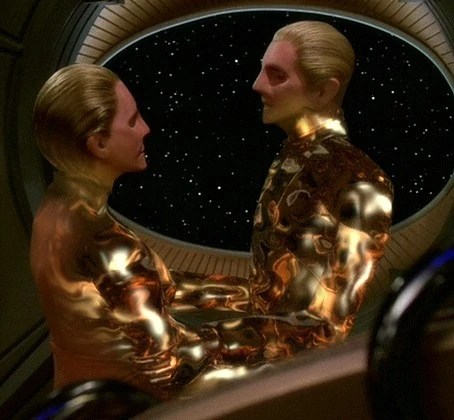
    I love depictions of alien life with alternative biochemistries, or even the absence thereof. Silicon-based life was popularized in the Star Trek TOS episode “The Devil in the Dark” with the Horta, and has since remained a staple of science fiction. The Changelings of Deep Space Nine are also an incredibly strange and wonderful form of life that appears carbon based, but probably have so much more going on.

    My favourite non-carbon-based alien life form, however, is the Hiss from Remedy‘s Control.
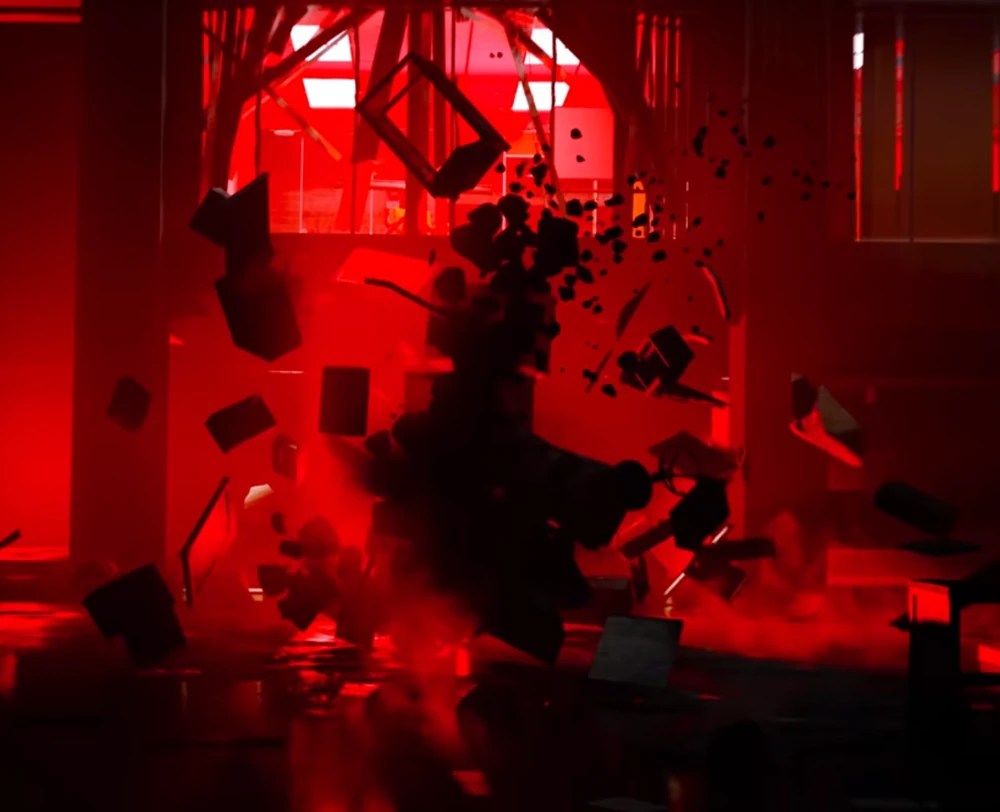
    The Hiss is hard to describe. It’s a “resonance-based entity” so it exists primarily as a sort of signal, radio wave, or vibration. It came crashing through the walls of our reality from a parallel universe, and its been doing this dimension hopping for God knows how long, taking over who knows how many cultures in its wake.

    It’s like a virus in the way it takes control of the people, places, and things it passes through. And when you become possessed, you act like a modem or relay, infecting others with the Hiss signal.

    But it’s also adaptable like a full-fledged organism. When it encounters something that resists infection, it takes those it possessed — usually soldiers and security guards — and “activates” them, sending them into battle to destroy the one resisting, or subdue them so that they can be overwhelmed by a more powerful burst of the signal later on.

    And resisting only makes things worse: the Hiss is an interdimensional force with loads of shit that it acquired over its time roaming the multiverse, including the supernatural weapons of fallen civilizations. It can and will throw the arsenals of whole planets — including some Lovecraftian monstrosities — at you if you fight it hard enough.

    Oh and the best part? Any single ability or weapon the Hiss acquired can, eventually, be uploaded to all its soldiers.

    Basically, unless you’re Jesse Faden, or the Dark Presence, your one choice with the Hiss is when you’re ready to give in. I can’t really think of another sci-fi property with a “sound-based life form.”

    SPOILERS!

    Hey, we haven’t had one of these sections since Seeds of Change!

    So, as is typical with these alien arrival stories, the visitors from space are here to gauge our evolutionary development and find out if we present a threat. Is coexistence possible? Can’t we all just get along?

    In the final chapters of the book, Connie is killed by one of the aliens’ venomous stingers and Toby is telepathically possessed in order to communicate with Don. Since Don’s a writer, they want him to write a book recounting the whole alien encounter from his point of view, so the aliens can understand how humans see them.

    So yeah, the whole book is basically a seven-day retrospective on a First Contact event gone horribly awry.

    Would You Like to Know More?

    Fiiine, Stephen, I’ll give you a walk.
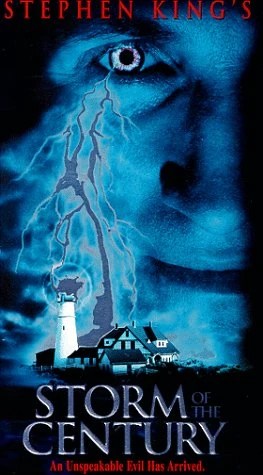
    The framing devices of Invasion, the family-man protagonist, the oppressive winter storm, and the constant taunting of the aliens also put me in mind of Stephen King’s stories. He does that a lot in his books: frames the entire tale as a recollection by a writer and an outline of the lessons that man learned, but the one in particular I’m thinking of is Storm of the Century.

    This is tying back to the start of this review re: all the comparisons you could make between King and Koontz. I just find it funny that from 1999 to 2001, King retread so much of the same ground Koontz did in 1975 with Invasion.

    Don writes the book in three days, and gives it to the aliens, and the aliens give him back his son… and another gift.

    This legitimately knocked my socks off.

    The aliens turned and stalked out of the room.

    They were finished with me, and they never looked back.

    Toby said, “Dad? What’s going on here? I’m scared.” His voice trembled.

    “It’s over,” I assured him. I picked him up and hugged him. “There’s nothing to be afraid of now.”

    “Where’s Mom?”

    “Let’s go find her,” I said, a lump rising in my throat.

    I carried him upstairs.

    She was sitting up in bed when we got there. She was as beautiful as ever. “Don?”

    “I’m here.”

    “Toby?”

    “Hi, Mom.”

    Death is not final.

    — Pages 189-190

    I did not see that coming.

    The whole tone of the book right up to the end has been dark, and each moment affirmed Don’s bleak worldview. The aliens fucked up his life, tore his heart out, threatened his son, but at least he could cling to that small certainty that life is finite and death is final.

    And then the aliens resurrect his wife like it’s nothing.

    Don’s orderly world is upended on the last page, and the last two paragraphs he writes feel like a man coming to terms with his own insanity. It’s a happy ending, but it’s the kind of happy that comes from accepting there is no meaning in the world. The rules don’t apply, and never did. Don was delusional the whole time.

    This ending is disturbing because it confronts us with a world where life and death are freely given and bartered for. The end doesn’t have to be The End. But we only value our earthly time because we believe it to be finite.

    Would we still value life if it were not finite?

    Conclusions and Recommendations

    I read that Dean Koontz soured on Invasion for the same reason that other Laser Books authors soured on their works: Roger Elwood did a lot of cutting-down to meet the guidelines set out by Harlequin. I can only imagine that Koontz would’ve doubled down on the passion between Don and Connie and extended the book to draw the tension out like a blade. He keeps saying he might pick up Invasion and republish it as it was meant to be, like Tim Powers did with The Skies Discrowned, but it’s been over fifty years, so I don’t know how likely that is.

    I’m saddened to hear he doesn’t like the book because it is truly an incredible novel. I still can’t believe it’s one of the Laser Books. Playing within the rigid guidelines, Koontz somehow came out with a story that could stand all on its own. And like I said at the start, he even beat Stephen King to the Dreamcatcher scenario of “alien invasion in the snow.”

    No notes at all.

    My Goodreads Review

    This is my first five-star Laser Book review, and it is well earned. Dean Koontz, writing as Aaron Wolfe, wrote an “alien invasion in the snow” story a full 25 years before Stephen King wrote Dreamcatcher, but whereas Dreamcatcher is a hot mess, Invasion is a suspense story as chilling as an Alberta Clipper, with deep musings on life, death, family, and meaning in the cosmos. I can recommend this book heartily and without any reservation. It is a killer tale.

    Well, death may not be final, but this review has certainly reached its end, and so I bid a teary-eyed farewell to Dean Koontz, a.k.a. Aaron Wolfe, and look to our next Laser Book.

    Who’s Next?

    Ladies and gentlemen, let’s give a warm welcome to our favourite spinner of time travel yarns, Gordon Eklund! So happy to have you back so soon, bud! We’re really eatin’ good with the last few Laser Books. Let’s check out the blurb.

    Blurb

    As a mercenary soldier of fortune, Calvin Waller has grown used to danger. Danger is the air he breathes. But when he finds himself thrown from the midst of an African battle into a primitive farm community of the future, he is naturally disoriented. Trained as he is, he quickly gets his bearings and begins a new and different battle…only to be “thrown” again. He is being manipulated. Falling Toward Forever, is the story of his search for The Manipulator, and for himself. A strange and wonderful search…for The Manipulator holds all the strings.

    I’m tremendously excited to see what other temporal twists Eklund can cook up after Serving in Time! See y’all soon!

    Public Service Announcement

    The Laser Book reviews will be switching from a weekly to a bi-weekly upload schedule. This is so that I can devote more time to editing my novel, Seekers of the Fallen Stars, to stay on track for a 2027 publishing date.

    In theory, I could keep releasing the Laser Books Reviews on a weekly basis, but their quality would suffer and I would soon run into the very real issue that I’ve not yet read all of them. At time of writing, I’m about halfway through 16. Kane’s Odyssey. That still leaves 42 titles I have to get through, and I do want to read and write other things over the course of this year.

    The quality and length of the Laser Books Reviews depends on two factors:

    • The quality of the book I’m discussing
    • The kinds of jokes and discussion topics I’m able to pull in based on who the author is

    For example, the Seeklight review was one of my favourites to write because of K.W. Jeter’s Star Wars connection. I could make so many references and jokes based on that. That’s the kind of review I want to deliver every time, and so I need time in order to keep that up.

    The good news is, you’ll be getting Laser Books reviews up through next year, and in the off-weeks, I may have a chance to talk about other books I’ve read or projects I’m working on. Ultimately, my novels and short stories take precedence over this blog, but if I can consistently deliver quality work on both fronts by giving myself more time, I will do that.

    Excellence, in all things! I’ll see you guys in two weeks!
  • Laser Books Review 8

    Laser Books Review 8

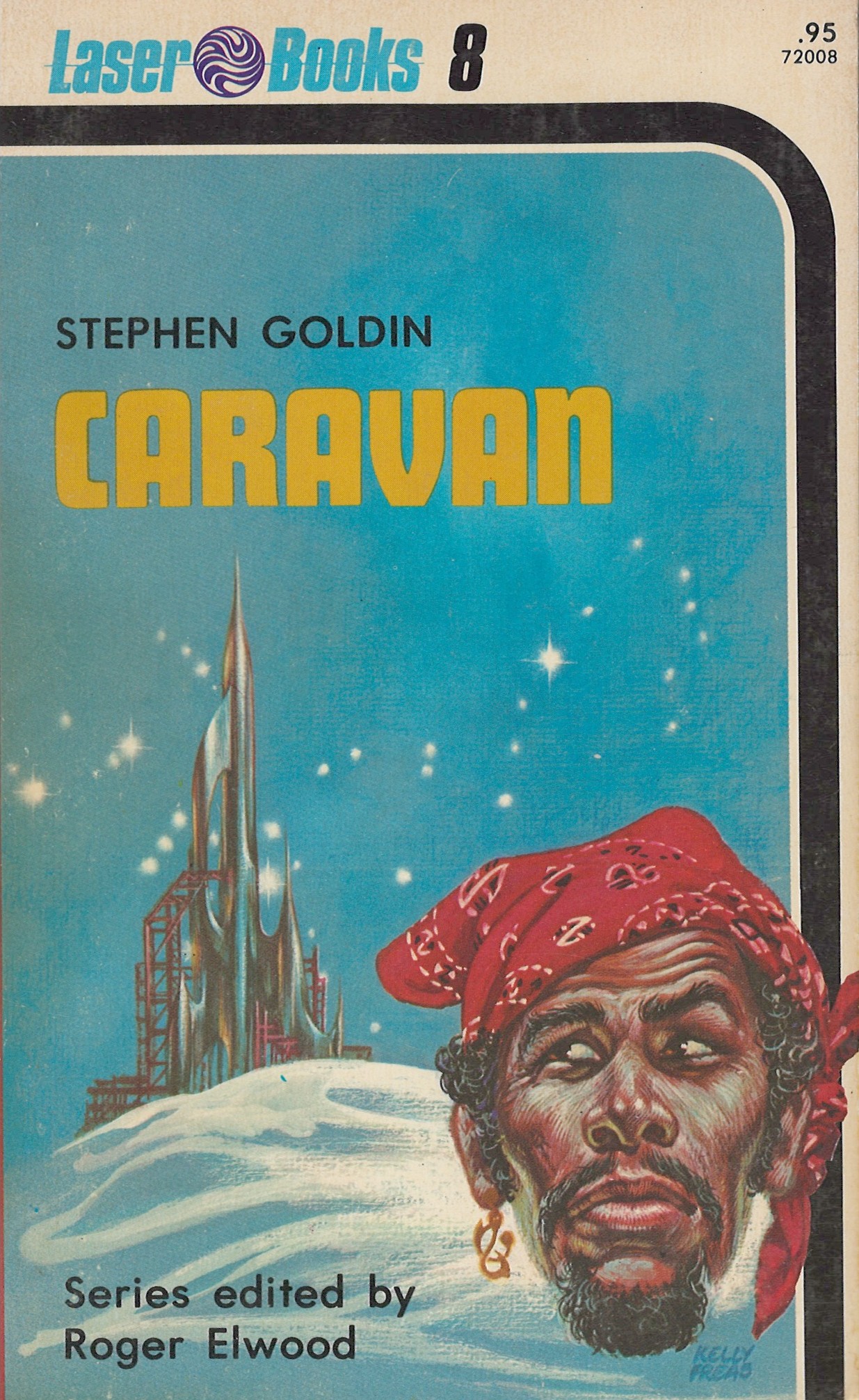
    8. Caravan by Stephen Goldin

    We’ve had one, yes, but what about second Goldin?

    Yes, dear readers, I am delighted to say that the author of the fantastic Columbo-style howcatchem Herds has returned with a new yarn, this time the tale of a nightmare road trip across doomsday America.

    If you haven’t read my review of… wait a second.

    *Squints*

    Well, I’ll be damned!

    I completely forgot that I bought this at Re: Reading on the Danforth!

    What a lovely day this is turning out to be. It’s little things like this that make life worth living.

    It’s my sincere pleasure to introduce you all to my favourite place to shop for used books in my hometown of Toronto. Re: Reading has everything: a juicy selection of genre fiction, rare first editions from the likes of James Clavell and Frank Herbert, complete TV series on DVD, but my personal favourite is the shelf in the Quantum Unicorn: Science Fiction Fantasy Chamber filled with back issues of SFF magazines dating to the 1950s.

    You wouldn’t believe some of the things they’ve got here! Old issues of Galaxy with some of Herbert’s earliest short stories, copies of Analog containing the first appearances of the Strugatsky Brothers in English, and issues of The Magazine of Fantasy and Science Fiction stuffed with original cinema and science columns penned by Harlan Ellison and Isaac Asimov. Buy three, get the fourth free!

    And I have.

    God help my reading list, but I have…

    This isn’t even all of it…

    But wait there’s more! When I asked Christopher, the proprietor, if he had any Laser Books, he said, “Yeah, I think we have a couple.”

    A couple? Try a couple dozen!

    Unfortunately, most of them were copies of books already in my collection, but Caravan was one of those I was missing, so I was pleased as punch walking out of the store that day.

    Man, fifteen bucks to get multiple original publications of some of the best sci-fi authors ever. What a magical place. If you’re ever in Toronto, or if you live there but have never visited Re: Reading, you can find them on the Danforth between Pape and Chester, closer to Pape than Chester. There’s parking one block north. Tell Christopher I sent you.

    Where was I? Ah yes!

    If you haven’t read my review of Herds — I mean, you should have, but in case you didn’t — I won’t get into the meat of that novel here. Instead, I’ll just briefly outline Goldin’s style:

    • Straightforward, unadorned prose
    • Simple characters with easily understood motivations
    • Scathing social commentary

    Herds in particular stands out in my memory for deconstructing several Golden Age of Sci-fi myths about society, chief among which is the nature of credibility: who has it and why.

    Herds currently stands as my second-favourite of the Laser Books, behind Serving in Time. I’m eager to find out where Caravan sits in the pack, but of course, as we all know, we must first weigh the work of Kelly Freas.

    Eh, it’s a bit of a step back from Seeklight in its use of negative space. I understand Freas is trying to imply the barren solitude of post-collapse America, but I don’t remember seeing much snow in Caravan. The burned-out husks of vehicles, the titular Caravan barreling down cracked and crumbling highways, and the gunfights in the gas stations and motels are the deepest impressions the book left in my mind.

    More Mad Max, less Mount Everest.

    Yes, there’s a spaceship, but you don’t see it till very late in the book when the caravan’s purpose is revealed. I don’t dislike it as much as Crash Landing on Iduna or Gates of the Universe, but like… come on.

    The most I can say is that Caravan’s cover doesn’t make me nauseated.

    The real star of this cover is the dude in the doo rag, Kudjo Wilson. He’s drawn with such personality, and the expression in his eyes could be anything from suspicion to hope to unease. Kudjo’s a guard for the caravan — a bad mofo in the parlance of the inner city. He’s the kind of black man white southern Americans have nightmares about: fiercely independent, loyal to his kin, and extremely handy with a switchblade.

    When the cops show up at Kudjo’s house, they’re the ones who leave in body bags.

    So, on the cover as well as in the book, Kudjo’s really carrying the day. I’ll give points for the portrait, even if the overall composition is lackluster.

    *Sigh*

    Do we have to? We all know Marketing Guy fucked it up, can we not just skip this bit? No? Fiiiine.

    Blurb

    When Peter Stone wrote his book, “World Collapse,” he thought he was just describing possible trends his book might help avoid. But not only did the collapse come, everyone blamed Stone for it, because he had predicted it. He is rescued from the angry mob by a caravan of “idealists.” The caravan’s leader, Honon, is the most idealistic, practical, hardened, lovable leader to come along in many a year… and it is only his belief in his dreams that enables the caravan to reach the starship. Stone had never predicted this!

    Holy shit… it’s actually good?! How?! How did this happen? Did Marketing Guy get replaced between books? Is this MG 2.0?

    Okay, straight up, not a word of a lie, I’d buy this book, and I’ll tell you why.

    Growing up as a child of the early 2000s, I was a devotee of Al Gore. I watched The Day After Tomorrow too many times to count. I truly believed that radical changes in the climate were just around the corner. And then… they weren’t. Of course, they were happening, just not on the time scales predicted.

    Later, I read Michael Crichton‘s novel State of Fear and became a closeted climate realist. I believed the carbon footprint idea was a government deception like the Red Scare and the War on Terror in order to distract and control people.

    Would You Like to Know More?

    It turns out I was half right. BP Oil created the notion of a carbon footprint to shift the blame for catastrophic emission levels onto the general public. The result was a sort of mass-flagellation that any student of history would immediately find familiar:

    When life is getting worse for the Everyman, tell him he can fix it by depriving himself of the things he wants and becoming an ascetic, and get him to shame anyone who won’t do the same. Thus the real culprits get off the hook.

    I tell you all this because the resentment I felt toward people like Al Gore is something I saw reflected in many people throughout the 2010s. There was a cancerous belief that the prophets of science had failed us. That oft-repeated refrain of, “It will happen. Maybe not on the timescale we predicted, but it will happen” became hateful to a great many people, myself included.

    Obviously, I’ve got my head on straight now, and that’s why this blurb intrigues me.

    How would the world treat a prophet who lived long enough to see his prediction come true?

    Humans always shoot the messenger, despite all adages to the contrary. And as the 21st Century matures and brings with it all manner of climate catastrophes, will we change our attitudes toward the climate scientists we’ve spat on and disregarded for so long, or will we ultimately hold them responsible, either for speaking too loudly or doing too little, to stop climate change?

    Story

    Caravan posits a world where overpopulation has led to societal collapse. Peter Stone, the protagonist, predicted this in his book, “World Collapse.” Each chapter begins with a real-life news article, and a page from Stone’s book commenting on the societal phenomenon in the article.

    Would You Like to Know More?

    We’ve had one, yes, but what about second Stone?

    Yep, if you’re keeping track, this is the second Laser Book with a protagonist named Stone, the first being Thomas F. Monteleone‘s Seeds of Change (check out my review for that here).

    Let’s go for the hat trick, Roger Elwood. One more Stone! One more Stone!

    The pages written by Stone (which in fact are written by Goldin) read less like a non-fiction book about societal phenomena and more like a YouTube commenter trying to sound intelligent by regurgitating concepts they kinda sorta understand, but have no intention of doing anything about.

    Slacktivism, in another word.

    Reading his passages, I actually find myself sympathizing a little bit with the other people in the world.

    Would You Like to Know More?

    The premise of Goldin’s book is that overpopulation will lead to collapse, but in the last two decades, it’s begun to look like underpopulation, or demographic collapse, is the greatest threat facing the nations of the world. With the cost of living rising to an exorbitant level, it’s very difficult to raise children, and with a decline in population comes an inability to exploit and distribute a country’s resources.

    Gas stations run dry.

    People can’t drive to the grocery store.

    Those with no support systems like family or friends begin to die off.

    Populations shrink faster.

    Buildings sit empty.

    Nature begins reclaiming cities.

    What’s so eerie about Goldin’s depiction of America is that he absolutely nailed what the country — and indeed the Earth — would look like if demographic collapse occurs on a widespread scale: ghost cities, silent suburbs, and decaying highways, all primed for plants and animals to retake them.

    The story begins with Stone trying to find sanctuary in an America where police have turned into gangs, people shoot each other over gasoline, and the government has abdicated all responsibility to its people.

    Basically the modern United States.

    Scarcity of resources and Stone’s reputation as a doomsayer means he’s always turned away by the gated societies that still survive. Leaving one of these societies in despair, he is set upon by a group of kids who recognize him, and blame him for their present circumstances. Just before they can really work him over, Kudjo Wilson shows up and gets medieval on the kids asses, saving Stone’s life.

    Kudjo belongs to a caravan, a group of armed men and women criss-crossing the country gathering what resources they can, and delivering it to a launch site in the Carlsbad Caverns. From there, a splinter of the US Government launches spacecraft to carry what’s left of humanity to the stars. The leader of the caravan, Honon, invites Stone to join them. With nowhere else to go, Stone accepts.

    Would You Like to Know More?

    Honon invites Stone to join the caravan because Stone is a cynic; as Honon says, “Every cynic is just an optimist who’s been knocked around one too many times.” This is actually a central theme of the book: why does anyone go on living if they believe there is no hope left in the world? Are we just hardwired to choose life, or deep down, in our heart of hearts, do we all preserve a spark of hope that things will get better?

    Many moral conundrums ensue as they drive westward across the country, including a question of whether or not to chase down and punish a group of raiders who attacked a defenceless settlement and raped a woman. Some of the sequences in this book can be truly brutal, and Goldin pushes the envelope of the Laser Books in the violence he depicts.

    The caravanners are not much better than raiders themselves: they believe their mission of preserving humanity entitles them to steal from anyone they want and take on the mantle of judge, jury, and executioner when they feel it necessary. But Goldin again demonstrates nuance when he shows the internal struggles of the caravanners with their role.

    Honon is a complicated leader: he pursues his goals doggedly, but questions himself at every turn. He remains strong for his people, but isn’t above saying, “This moral dilemma is too big for me to decide alone. You all should have a say.” He believes criminals should be punished, but isn’t totally comfortable meting out justice at gunpoint just because there’s no other option in a lawless world. Honon tries to be pro-social in a world where societies frequently fall victim to infighting, powerplay, or each other.

    Caravan’s Best Scene

    There’s a woman in the caravan Stone falls for: Risa. She left her neighbourhood when she was little and hasn’t seen her mother since.

    The route the caravan takes brings them close to Risa’s neighbourhood, and she and Stone take a detour. They find her mother’s house and it’s… empty.

    This is such a crushing moment to read because it makes the collapse of society deeply personal. What if you left home, and came back to find it utterly abandoned, silent, empty? What if you came home hoping for just one last hug from your mother only to find her gone — not dead, but vanished?

    I can only imagine this is the experience many Ukrainians will have when the war with Russia finally ends; people will go back to their homes, looking for their parents, and find, if not craters, deserted suburbs, picked over by scavengers.

    It’s a really bleak scene and hits harder than most material in the Laser Books ever does.

    Stone transforms in a big way by the end of the book. He regains his sense of optimism and devotes himself to building a new life out amongst the stars with Risa, whom he marries on the last page. It’s a weirdly optimistic ending considering all that’s come before, and I can’t imagine any other sci-fi novelist from this period doing the same, but it’s the Laser Books, so whatever.

    Conclusions and Recommendations

    With Herds we’ve got a Columbo episode and with Caravan we’ve got Mad Max. Both these books work because they examine the personal cost of extraordinary events happening to ordinary people.

    But as with Herds, I think Goldin could’ve gone further in exploring the inner life of his protagonist. Stone feels too much like a casual observer to events. What did he lose in the collapse? What did it cost him? These are the things I need to know. Again, Goldin’s female character, Risa, holds more promise in her character arc than Stone, but is held back by being a secondary character.

    My Goodreads Review

    Caravan is striking because it depicts a post-apocalyptic America which is far closer than people think — not because of overpopulation, as the book suggests, but demographic collapse, which many countries now face. Some of this imagery will haunt me for years. The social commentary isn’t as deep as Goldin’s previous entry in the Laser Books, Herds, but it’s still enough to tickle your brain.

    We must now bid farewell to Stephen Goldin once again, and this time for a long while. We won’t see his name until Laser Book 25, Scavenger Hunt, near the middle of this series. I’m keen to see what he cooks up then.

    Brr… is it getting chilly in here?

    Who’s Next?

    YEEEEEESS!!!

    That my friends is the sound of the angels singing rapturous harmony. Next Monday is gonna be a watershed moment in the Laser Books, because our next title is Invasion by Aaron Wolfe.

    If that name doesn’t ring a bell, it’s because it’s a pen name for an author you’ve almost certainly heard of.

    An author of over 140 published novels and 74 short stories.

    An author who’s sold over 500 million books.

    An author with a net worth of $200 million.

    An author by the name of…

    Dean Koontz.

    And he has written the first five-star Laser Book.

    Blurb

    Barry Malzberg says that Invasion “is simply one of the most remarkable first novels in any field that I have ever read.” The English critic, Philip Pollock says that it is “quite genuinely spine-chilling, well-written… with a twist to the ending which I like very much…” (but we can’t reveal the ending). He goes on to say that “in any collection of SF there has to be one tale such as this, and I think it might probably be difficult to find another one of quite this calibre.” Difficult indeed! Invasion is nothing less than a superb novel.

    I’m not even going to harp on the fact that, like Seeklight, this is another critics’ blurb, because for once, ladies and gentlemen, the critics are absolutely correct.

    Dig out your snowshoes and zip up your parkas. Next Monday brings a blizzard…

    … and terror.

  • Laser Books Review 7

    Laser Books Review 7

    7. Seeklight by K.W. Jeter

    Jeter, Jeter, pumpkin-eater.

    Now we’re on to a book from an author of Star Wars tie-in stories whose name sounds like the callsign of a TIE/In starfighter.

    As mentioned in my review of Gordon Eklund‘s Serving in Time, K.W. Jeter came up through the ranks with James P. Blaylock and Tim Powers. They all met in the English program at Cal State Fullerton and became close friends, publishing poetry in the English department’s periodical under the name William Ashbless, who later became a recurring character in Powers’ books.

    Would You Like to Know More?

    William Ashbless is basically the Glup Shitto of the Blaylock/Powers/Jeter-verse.

    His biggest claim to fame seems to be The Bounty Hunter Wars, a SW sequel series depicting Boba Fett‘s escape from the Sarlacc‘s stomach and fight to make a name for himself in the post-Imperial era. Sounds like a terrific plot that a certain Maori actor would make a meal out of.

    Would You Like to Know More?

    “There’s always a bit of truth in legends.” — Ahsoka Tano, Star Wars: Rebels, Episode 221, “Twilight of the Apprentice: Part 1”

    I’m going to say something that will earn me more enemies than Prince Xizor: I applauded Disney for binning the expanded Star Wars universe into the Legends label.

    Lets be brutally honest: the Star Wars EU was a slapdash, haphazard, derivative mess. It was developed in a panic by 20th Century Fox five minutes after A New Hope came out and they realized that this weird little money sink was actually going to be a watershed moment in cinema. So they hired a bunch of sci-fi writers and cobbled something together.

    Most of the EU was bad, a lot of it was contradictory, and the really good stories to come out of it did so in spite of the Star Wars label, not because of it. And while I’m slaughtering this sacred cow, I’ll add that Star Wars itself is a derivative mess; scratch the paint, and you’ll find Dune, Foundation, and a half-dozen Kurosawa films underneath. My brother Sean described it perfectly: “Star Wars is a gateway drug to better sci-fi.”

    So when Disney axed the EU, I thought it was a masterstroke. They freed themselves from being stuck with the ball-and-chain called “canon” and could then cherry-pick the best stories to come out of the EU.

    Of course, that was assuming Disney would then cherry-pick the best stories to come out of the EU, and here was a wrinkle I did not anticipate: Kathleen Kennedy. Man, that woman had no idea what she was doing…

    I’d say it’s a good thing Dave Filoni was there to pick up the pieces but even he seems to be losing the plot these days.

    I digress.

    My point is, Disney should’ve looked to writers like Jeter and Timothy Zahn, whose respective Bounty Hunter and Thrawn Trilogy provided the perfect roadmap to writing a sequel trilogy. The stories were already a hit with fans, and Dave Filoni could’ve punched up the writing and drama.

    But there’s not much chance of righting the ship these days.

    Goodreads lists Jeter as having contributed tie-in work to Star Trek: Deep Space Nine (my beloved) and Blade Runner as well, but Seeklight is his first novel. Since Jeter is usually known for his work-for-hire books, I’m keen to see what his earliest efforts entailed.

    But the Padawan must wait, for Master Freas is speaking!

    Cover

    “I’ve got a really good feeling about this.” — Han, Solo: A Star Wars Story

    Something tells me this story’s gonna be really upbeat with lots of love, hugs, and mutual acceptance. What a lovely change of pace!

    Even the robot agrees with me!

    Seriously now: this is Freas’s most striking cover yet. The red background is the first thing you notice. It’s so nauseating to look at! This is a good use of negative space. Instead of a flat field, Freas gives the red background a subtle texture like clotted blood, which fits this story really well because Seeklight deals with violence, both immediate and generational.

    The other thing the background reminds me of is the Warp from Warhammer 40,000 or hyperspace from Babylon 5. Both are spaces which hide Lovecraftian nightmares, and neither are wholly safe to traverse. The spaceships superimposed over it are blurred, implying that they’re travelling at great speed, as if fleeing something hiding just outside our field of view.

    The next thing that catches the eye is the Regent–the robot priest. Everything about this guy screams “intelligent”: the book, the threadbare hem of his habit, the way he sticks his pinky out, the subtle “fuck you” in his scan cell eyes. This is a guy who looks like he knows what’s what, like he’s in on some kind of big secret (which he most certainly is). The way the ragged hem of his garments subtly bleeds into the background implies he is part and parcel of the violence of this world. He looks ancient, powerful, and merciless. Such a great translation of a character design from page to art!

    And lastly, we have the Lady Marche in the portrait bottom-right. Her design is handsome if plain, but it’s the expression on her face that’s of note. She looks perturbed, frightened even, as if she knows something terrible is coming.

    All in all, this is one of Freas’s most interesting covers so far. Most pieces of art (cover art, certainly) draw your eye to a character or location in the foreground, and only then do you investigate the deeper layers. Freas inverts this: the eye is instantly captivated with that blood-clot background, and roves over the texture, exploring every bulge and fold. And only once the eye has been satiated by this horror show does it start pulling back through the layers, seeing the spaceships, the Regent, and Lady Marche. This is such subtle, inventive work on Freas’s part, and he still manages to capture or evoke all the crucial elements of the novel! Truly excellent.

    Blurb

    Barry Malzberg calls Seeklight one of the three or four best science fiction novels he has ever read by an author new to the field. The world Seeklight creates is extraordinary. The English critic, Philip Pollock, says Seeklight is a “straightforward, highly imaginative, very well told story. It falls into the class that I rate as ‘a jolly good read’. As the crime novel critics say ‘I couldn’t put it down’.” He concludes his review by saying, “For a first novel it has remarkable selfpossession and professionalism and I enjoyed it very much indeed.” There is no doubt that you will too.

    Oof. I’m always leery of book blurbs that quote what others have said about the story without saying anything about the story itself. I don’t care how high the praise is. I need to know about the world and the characters so I can make an informed decision about whether to buy the book.

    Now, I know it’s common practice to include quotes from other well-known authors on a book cover/jacket, but we don’t have that luxury or space when it comes to Laser Books, so I wouldn’t buy this based on the blurb.

    Story

    “It’s not a story the Jedi would tell you.” — Sheev

    Fans of Dune and Star Wars will immediately find parallels within Seeklight: a young noble loses his only family and goes on the run with some blue collar workers. In the end he chooses to pursue his birthright and confront the dark history of his family.

    But I’m getting ahead of myself.

    Seeklight begins with an introduction and a prologue. The introduction is written by SF (or s-f, as he writes it) veteran Barry Malzberg.

    Would You Like to Know More?

    In researching this review, I learned that Malzberg become one with the Force fairly recently, in December of 2024. In the obituary on the SFWA website, Author Robert J. Sawyer says of Malzberg:

    “Barry N. Malzberg was a true mensch. He believed fervently in the power of science fiction and fought for it to transcend being a commercial category of mere escapism. The field has lost not only one of its greatest authors but also one of its fiercest champions.”

    I don’t know much about Malzberg, but this endears me to him. Sci-fi is still, even in the post-2001, –Trek, –Star Wars era, spat upon by literary writers, critics, and audiences, despite the fact it is beloved by millions upon millions of people of all ages, creeds, and colours around the world.

    The prologue is simply an excerpt from a chapter later on in the novel.

    Seeklight is set on a human colony far from Earth. Human genetic material was sent here and shepherded to life by robots from the spacecraft that touched down. Daenek, our protagonist, is the son of an assassinated thane and is treated like an outsider for the perceived crimes of his father.

    What struck me initially is that the opening chapters of the story play out much more like a traditional fantasy novel: An orphan prince is raised by a wise female with forbidden knowledge and secrets, is forced to leave his home, go on the run, falls in with a found family, but ultimately leaves them in search of his heritage.

    Magic and technology are indistinguishable in this world because no one can quite remember what the dividing line is between the two; there’s a hint of Stephen King‘s Dark Tower series in the depiction of an advanced world gone to decay, corruption, and forgetfulness.

    It is in these motifs that we see the pedigree that will earn Jeter a place amongst the Star Wars tie-in novelists: his blending of mystique and technology is a staple of the Galaxy Far, Far Away.

    In Seeklight, the decay of the world is the result of the Dark Seed, a piece of genetic coding which manifests as a subtle apathy in all the people of this world. Things don’t get fixed, no one aspires to anything, and when misfortune occurs, everyone just accepts it. Daenek isn’t spared, and I was legitimately surprised with how Jeter manifested the Dark Seed in his protagonist.

    Would You Like to Know More?

    It isn’t by chance that the Dark Seed proliferated across the planet. The robots who were built to be caregivers, protectors, and teachers to the human colonists decided they could do a better job of running the place, and so they threaded the Dark Seed throughout the population. Over time, people would become so disaffected and apathetic that the robots would just take over by default, because no one could be arsed to lift a finger to govern.

    Humanity brings about its own genocide through sheer laziness.

    In a typical narrative like this, the hero confronts the evil festering at the heart of the world, rallies people together, and puts right what once went wrong. Jeter makes you think that Daenek will rise above the Dark Seed and fix things, but he doesn’t.

    At the end of the novel, Daenek confronts the Regent (the ruling robot) and learns just how extensive the Dark Seed’s corruption is. He claims his birthright, but decides that no amount of personal or political power is enough to stop the robots, and so he simply… leaves.

    Daenek, son of the Thane, the man entrusted to safeguard the people, falls victim to the Dark Seed–to apathy, to lack of willpower–and departs his home world. Perhaps he goes to Earth, or another colony that the robots haven’t taken over, but he knows deep down that wherever he goes, he will be a pauper, a street urchin, a nobody. His genetic destiny holds no currency beyond his home world. The Dark Seed holds sway, and the robots claim their planet.

    It reminds me of a quote from one of my favourite plays/films:

    “God made the angels to show Him splendor, as He made animals for innocence and plants for their simplicity. But Man He made to serve Him wittily, in the tangle of his mind. If He suffers us to come to such a case that there is no escaping, then we may stand to our tackle as best we can, and, yes, Meg, then we can clamor like champions, if we have the spittle for it. But it’s God’s part, not our own, to bring ourselves to such a pass. Our natural business lies in escaping.” — Sir Thomas More, A Man for All Seasons

    This quote has stuck with me since I first heard it, because it illuminates and redeems humanity in such a special way. If you turn away from a great moral struggle, it doesn’t make you a coward, it simply means you have not yet found the line you cannot cross. Each of us has a hill we may die on, and we will have no choice about that, simply because our conscience will not permit us to choose otherwise.

    This quote made me a lot more forgiving of people who, as Dante wrote, “Maintain their neutrality in times of moral crisis.” To be human is to want to live, to survive, to escape danger. Before you shame someone for not marching in a demonstration, or standing up to an authority figure, ask yourself: “Would I have the courage to do better?” In most instances, the answer is no, and that’s all right.

    You simply haven’t found your hill yet.

    The ending of Seeklight is brutally honest, and I respect the hell out of Jeter for writing it. Daenek’s decision to escape rings true, and elevates Seeklight above a simple s-f adventure.

    Conclusions and Recommendations

    My Goodreads Review

    While most of the book is not very memorable, and some dialogue falls into the category of “Golden Age Sci-fi Schlock”, Seeklight is elevated by elegant prose and an ending which provides an incisive commentary on human nature. In terms of the Laser Books, I’d still say it’s a 3 out of 5, but that three is strong and very well earned. In other words, Jeter, you are on this council, but we do not grant you the rank of Master.

    Who’s Next?

    Herds author Stephen Goldin steps up to the plate for a second time this series with the novel Caravan. I’m delighted to have him back. Blurb it, baby!

    Blurb

    When Peter Stone wrote his book, “World Collapse,” he thought he was just describing possible trends his book might help avoid. But not only did the collapse come, everyone blamed Stone for it, because he had predicted it. He is rescued from the angry mob by a caravan of “idealists.” The caravan’s leader, Honon, is the most idealistic, practical, hardened, lovable leader to come along in many a year… and it is only his belief in his dreams that enables the caravan to reach the starship. Stone had never predicted this!

    Damn, Marketing Guy, you might’ve actually gotten done good for once!

    So, next week we shall make a pilgrimage back from the fringes of known space to our own backyard, and see what humanity has done with the place. I’m really looking forward to another Goldin title, and I hope you are too. See you there!

    And remember…

    The Force will be with you, always.

  • Laser Books Review 6

    Laser Books Review 6

    6. Serving in Time by Gordon Eklund

    Fire up the DeLorean and cue the Huey Lewis, we’re goin’ back in time!

    And forward in time!

    To utopian futures and altered histories.

    To villains triumphant and heroes betrayed.

    To elections lost and wars won.

    Ladies and gentlemen, Earthlings and Vulcans, androids and temporal agents, I give you…

    Serving in Time by Gordon Eklund!

    Oh my friends, words cannot begin to express how excited I am to share this book with you. As I mentioned at the end of my review on Walls Within Walls, this is the title that convinced me to start writing about the Laser Books. It’s not only a standout in the canon of science fiction, it’s also, like Herds, a story of hope for the times we live in, a scathing examination of our preconceptions, and an exhortation to fight the good fight no matter how impossible things seem.

    There are twists and turns aplenty in this book, and I long to dig in, but like our hero Jan, I’m going to break the chronology here a bit.

    If you like science fiction.

    If you like stories of hope.

    If you like time travel.

    STOP READING NOW.

    Try to find a copy of Serving in Time and read it, because this is not a tale to be spoiled lightly. And believe me, I’m going to give you everything in this review, nothing held back. The whole story will be revealed to you, and I would hate to leave you wishing you’d read this book before I told you about it.

    So consider carefully, because this is your one and only warning.

    SPOILER ALERT!

    Let us begin.

    Cover

    “I’m back, baby.” — Bender, Futurama

    Hallelujah and sing Hosanna, brethren, Kelly Freas has returned!

    After the Trench of Sadness (books 3, 4, and 5) I feared perhaps Kelly had mentally checked out of the Laser Books altogether and resigned himself to turning in mediocre cover art for bad stories, but I see he merely needed the proper inspiration!

    Granted, this isn’t one of Freas’s most representative covers–at best I spy four elements that actually appear in the novel–but God damn, I love this cover! The spectra of blues, purples, and pinks is such a departure from the brown and green tones which have dominated the covers thus far. The warriors and political leaders of history are drawn with such subtlety and character. And my favourite element: the pink motes, which bring vibrance and warmth to an otherwise cold and flat field.

    Also, note how the light from those pink motes bounces off Horatio’s face in the portrait, making him a part of the scene rather than a separate entity. that’s extraordinarily subtle work on Freas’ part!

    My only complaint–and ’tis a very minor complaint–is that Freas doesn’t really capture the time periods represented in the book. Serving in Time focuses solely on American history; vikings, knights, and Cleopatra ain’t in it. But that’s okay, because a major theme of the story is that people are linked by invisible threads of cause and effect, and everybody matters.

    Would You Like to Know More?

    Another excellent time travel story with a similar premise of “Reluctant Time Cops” is the NBC television series Timeless. Co-produced by Supernatural’s Eric Kripke, and starring Abigail Spencer, Matt Lanter, and Malcolm Barrett, Timeless follows a team who travel back in time to stop a man from altering American history.

    But as these heroes try to put right what once went wrong, they begin to question whether the history they’re preserving is truly the best possible one.

    What’s similar between Timeless and Serving in Time is that they focus exclusively on American history, limiting the subject matter to well-known episodes from the United States’ past, and capture a sort of king-of-the-hill game playing out across spacetime.

    Plus, Freas still has an American frontiersman, politician, robot, and Horatio in the frame. I’ll happily accept an excess of style over accuracy any day!

    Blurb

    Jan Jeroux is leading a carefree and idyllic life in the serene, underpopulated pastoral earth of the year 2500. His idyll ends abruptly when he is abducted and forced to join the Time Service of the mysterious world government. In the service he learns how history was manipulated and controlled to produce the beautiful world he enjoyed so much. Thinking he understands how to rectify the injustice and devastation inflicted on the world by the time managers, Jan decides to make things right. But he makes a tragic error…

    Okay, this is a very confusing blurb. It basically sounds like, “There’s nothing wrong. Everything’s wrong, and our hero needs to fix it.”

    I don’t know if I’d pick up the novel based on this blurb, but I’m going to cut Marketing Guy a break here, because instead of being saddled with a story that’s unmarketable because it’s bland, he’s been given a tale that’s too complex and excellent to explain in 100 words.

    Having read the book, I can tell you exactly what happened here.

    The real conflict of the book doesn’t begin until the halfway point, whereas most books would kick into gear long before that. Don’t get me wrong, it’s riveting all the way through! But how do you pitch a book to a prospective reader when it doesn’t follow the typical narrative structure–especially when you only have 100 words to work with?

    Moreover, MG actually did an amazing job describing the plot of the book, and with another three sentences, he might’ve been okay. But this is the Laser Books, and in the words of the philosopher Jagger, “You can’t always get what you want.”

    But after two Tofte titles and the most forgettable novel I’ve ever read, Serving in Time is just what we need.

    Story

    Let’s travel back to December 15th, 2023.

    The time: 2:00 a.m.

    The place: Caesars Windsor, Ontario.

    A few hours prior, my dad had finished his guest appearance as Santa Clause in The Tenors‘ Christmas show in the casino theatre. I’d travelled to Windsor with him, partly to carry his suitcase, and partly because I hadn’t had a Christmas getaway in years, and let me tell you, The Tenors’ Christmas show is one hell of a way to celebrate Christmas.

    After roaming the casino floor in search of a Tim Hortons staffed by a lone overworked employee, we repaired to our room with a couple of cappuccinos and tried to entertain ourselves. Dad flipped through the various TV channels, and I read Serving in Time.

    There, sitting by the window, the lights of Windsor and Detroit glittering under a starless winter sky, I was carried away.

    As the blurb says, Jan Jeroux is Shanghaied into the Time Service after a conversation with his Uncle Phineas. Jan has never really had much responsibility in life, nor has he ever thought about how his perfect, utopian future came to be. But he’s about to learn.

    Would You Like to Know More?

    I’m convinced that Uncle Phineas is actually a future version of Jan; after giving Jan a pep talk, he vanishes into thin air two seconds before the Time Service comes for Jan, priming him for the adventure ahead–exactly the sort of thing the Time Service does throughout the novel. Eklund, showing masterful restraint, never confirms Phineas’ identity, but leaves it up to the reader to decide the truth.

    There’s no way out once the Time Service nabs you. If you refuse to serve, or fail to pass your final exams, they cast you adrift in the void of time to die. It may raise your eyebrows that a supposedly utopian society would have an agency that utilizes such tactics, but it makes sense when you think about it.

    Do you really think it’s safe to have a bunch of maladjusted flunkies who’d just been kidnapped and put through boot camp running around with the secrets of time travel in their brains?

    The mandate of the Time Service is purely to observe the past and not interfere. We’ve seen this kind of thing on Star Trek plenty of times: historians who travel across history to witness events like the battle of Waterloo or the building of the pyramids, but who cannot engage with or alter the events they witness.

    Sacred Timelines

    There’s a term Marvel coined called the Sacred Timeline. I feel it could be applied to many time travel stories. Essentially, it posits that there is a single, inviolate timeline that must be preserved, often with the assistance of time cops or forces outside of time.

    Some sci-fi properties like Star Trek include a “Temporal Prime Directive” or equivalent law forbidding all tampering with the timeline. The example burned into my brain is Crewman Daniels’ first appearance in the Star Trek: Enterprise episode “Cold Front”. Daniels shows Captain Archer a view from a temporal observatory, showing all the time travelers from the 31st Century Federation engaged in the real-time recording of history as it unfolds.

    These time travelers can observe, but cannot interfere. The title “Cold Front” refers to the Temporal Cold War which the Federation of the future is fighting with factions who want the autonomy to rewrite history, either for their own benefit or the perceived benefit of all. One of the Federation’s favourite tactics in the war is recruiting agents from the past–people already adapted to their time and place in history–presumably mitigating the amount of false identities they need to create, and minimizing the number of person-shaped-holes in history they need to patch.

    Most time travel stories centre on preserving the past rather than changing it (Back to the Future, Quantum Leap, Doctor Who), but this kind of non-interference raises several ethical questions.

    The Ethics of Time Travel

    Has anyone ever stopped to consider the psychological and emotional strain a policy of temporal non-interference would put on someone?

    How hard would it be for a black person to go back and observe Martin Luther King, Jr.’s “I Have a Dream” speech, knowing he’s going to be assassinated five years later, and being told they can’t stop the assassination?

    Or how about a Jew chronicling the Holocaust as it happened, and being told it’s illegal to save anyone?

    Or perhaps a woman traveling to, I don’t know, literally any period in history, witnessing crimes against her sex on an unimaginably wide spectrum of violence, and being told to just observe and come home?

    That’s why I love the show Timeless: it shows you how non-interference looks great on the living room television, but becomes impossible when you witness the weight of human suffering across history.

    The people of the past are not set dressing for a story, they are real. And most of them got the shitty end of the stick; those of us alive today are only here because our ancestors were either lucky or rich enough to escape the flood or the plague or the firing squad.

    “History isn’t a tale of who was right, but who was left.” — Sean Dick

    There are many reasons given in time travel stories why meddling with the past is wrong:

    • You may erase your present
    • You don’t have the right to play God
    • It’s morally wrong to meddle with people’s lives

    The admonitions are always given in light of what we might lose, never what we might gain. They are always focused on preserving the status quo, which tends to benefit only a few.

    Think of a below-the-poverty-line indigenous mother of three on a reservation. Do you really believe she would restrain herself from tampering with history? White men came and took everything from her people; now they’re telling her she doesn’t have the moral right to want to undo that?

    I would actually argue most people would leap at the chance to try and alter the past because every single person on Earth has been screwed royally at one time or another. I’m sure someone reading this has had a misfortune happen to either them or a family member that is perfectly preventable with a quick jaunt to the past. Perhaps you had a family member who was killed or crippled in a car crash.

    Or maybe it’s something even simpler: your train broke down and you missed that job interview you absolutely needed to get, and you have to move back with your parents because you can’t pay the rent on your 15-square-foot apartment anymore.

    These morality plays about leaving well enough alone only work for those who are happy, well-fed, and comfortable. It seems to me the only people who could possibly embrace this policy of “temporal non-interference” would be cis-het white men because we’re the only ones pleased with the outcome of history.

    Actually, wait a minute… I’m of Irish descent…

    Gimme that time machine! I’m gonna have a little “chat” with Oliver Cromwell!

    Well… I digress.

    If you read everything I’ve written and believe that the Time Service is doing more than observing the past, then you’d be right.

    Changing History

    After graduating from the academy, Jan is partnered with a veteran time traveler named Horatio (man, what a loaded name for a man voyaging to the past!) and goes back to 19th century New York.

    Horatio and Jan discuss whether they should vote for a local politician in order to gain his confidence and observe him in close company:

    “But won’t that create a paradox? I mean, you’re not really a person in this time.”

    Horatio smiled. “Paradoxes are a good deal harder to create than that. Time–history–is like a big river. It’s not easy to dam those powerful waters. If I vote, it won’t stay. The waters will sweep it easily away.”

    Horatio does a lot more than cast votes: he pushes a man off a sidewalk into the mud, causing him to miss an important meeting with said politician. Horatio brushes this off as nothing more than a bit of fun, but Jan is puzzled: Horatio directly, indisputably interfered with the past.

    But the present doesn’t look any different, so these changes clearly aren’t having ripple effects…

    Or are they?

    Kirk and Gail, Jan’s colleagues and fellow time academy graduates, persuade him that the Time Service might be corrupt, possibly trying to change history to suit their own ends. So as an experiment, Kirk says he wants to try stopping Horatio from bumping that man into the mud and seeing what response it prompts from the Service. Jan is reluctant to go along, but Gail supports Kirk. Kirk uses a time machine, as per their plan, only he doesn’t just stop Horatio.

    Kirk murders him.

    Jan and Gail return to their present to discover their utopian future is gone. In place of the world government under which they grew up, there’s a totalitarian regime that uses human-like androids to patrol the streets and summarily executes anyone who possesses firearms or advanced technology.

    Pursued by armed androids, Jan, smartly grabs a few history books before he and Gail retreat to the relative safety of the distant past. He reads the books and puts the pieces together, and what follows is one of the greatest mic drop moments I’ve ever read in a sci-fi novel.

    The Agenda of the Time Service

    Jan starts rattling off events that happened in the history that he knows.

    • George Washington was captured by the British and executed at the Battle of Fort Washington
    • The cotton gin was never invented
    • The United States declared war on Nazi Germany on September 1st, 1939

    This is when the reader makes the horrible realization that the utopian future of 2500 isn’t built on real-life history, but on a history manufactured by the Time Service.

    Horatio didn’t tell the whole truth when he said the river of time couldn’t be shifted. A single action can’t divert it, but a dozen of them? A hundred of them? All those small changes–meetings averted, wars declared, machines never invented–amount to a different future. That’s what the Time Service was created to do: divert the river of time and create a better, more egalitarian future.

    How?

    Let me explain.

    Take the cotton gin for example: what happens if it is never invented? Well, cotton farming doesn’t take off as an industry in the American South, which means there’s no demand for cheap slave labour. Slavery as an industry collapses in America and the Civil War never happens.

    Or how about the U.S. joining the war alongside Great Britain in September 1939 instead of waiting until December 1941? Faced with the prospect of fighting the most technologically-advanced nation on Earth, people rethink their allegiance to the Axis powers. Stalin cancels the rape of Poland. Many nations join the Allies. Nazi Germany is laid low long before the Holocaust reaches its peak, and President Roosevelt lives long enough to help Winston Churchill build the foundations for a World Government.

    Noticing a pattern?

    Every action the Time Service takes has a pro-social outcome. Populist xenophobes are prevented from rallying political support and taking office (hence Horatio pushing that guy into a mud puddle and making him miss his meeting), hateful ideologies are curtailed before reaching their zenith (hence the simultaneous declaration of war on Germany), and the general consolidation of power in the hands of individuals is prevented (hence Washington being caught and executed by the British).

    So wait a minute… what about the history we know? The one where the Civil War and Pearl Harbor happened? Where does that lead if not to the utopian future we saw at the start of the novel?

    The Aborted Timeline

    I hope you’re sitting down, dear reader.

    In most time travel stories, it is presumed that the real history of the world–the one you and I are living in–must be protected at all costs. Sure, it’s not perfect, but it’s better than the alternative. Think of Biff in Back to the Future II: he goes back in time, and creates a new timeline where he rules the world in a cyberpunk dystopia.

    These types of time travel stories are about a group of plucky adventurers putting things back to normal, where apprehending the bad guy will automatically reset time to the comfortable history we know.

    But in Serving in Time, the course which the river of time seeks to follow, the path of least resistance, the road which humanity will automatically take if everyone just sits back and not meddle with history–in other words, the Sacred Timeline–leads to a dystopian future where AI is used to police humanity, a totalitarian regime rules the world, minorities are not tolerated, and individual freedoms are severely curtailed.

    Reading this book in 2023 was a revelation like no other. The notion that the Sacred Timeline leads, forever and always, to dystopia, is a bitter pill to swallow. It’s a bold move on Eklund’s part, but it rings truer today than in 1975.

    But wait… if the Sacred Timeline leads to a dystopia… where did Jan’s utopian future come from?

    The Real Renegades of Time

    Let’s talk about the Time Service.

    The final great technological invention of the world tyranny in our timeline was a time machine. They wanted to use it to tighten their grip on the planet and increase their power.

    But the men and women who invented the time machine had other plans. They wanted to create a better world, and they knew the only way to defeat the tyranny was to kill it in the womb.

    The problem is, no single action in history will stop the tyranny from rising. This would be the work of many agents, acting in concert, to build a dam brick by brick which would divert the river of time.

    And they would have to repeat these actions: return over and over again to the critical moments and take the exact same actions. Utopia wouldn’t just be a one-and-done deal, it would require an entire army working forever and always to maintain it.

    And you know what? It worked. Utopia was born.

    But it turns out that Kirk, Jan’s friend from the academy, is actually a survivor of the aborted timeline. He, along with a handful of other agents, followed the Time Service’s founders into the new timeline, infiltrated the Time Service, and waited for the exact moment to strike.

    Their plan isn’t to break the dam, but to ensure it is never built in the first place, and the best way to do that is by killing the dam’s builders.

    Kirk’s plan works flawlessly, and Jan and Gail find themselves alone and without help. They spend the next few (subjective) years of their lives working to figure out exactly what events the Time Service manipulated, and how to tip their outcomes onto the utopian path. Ultimately they are successful, but it’s a harrowing road to get there, and many times it seems as if they are only going to obtain a partial victory. The writing and pacing has the ever-increasing momentum of a steam engine at full throttle.

    Conclusions and Recommendations

    “Our lives are not our own. We are bound to others, past and present, and by each crime and every kindness, we birth our future.” — David Mitchell, Cloud Atlas

    I wish this book were longer, but I’m astounded at how much Gordon Eklund accomplishes in the 190 pages afforded him.

    He somehow manages to write not only one of the best Laser Books, but also one of the most intriguing and challenging sci-fi books I’ve ever read. His assertion that evil always wins unless extraordinary measures are taken is not a new theme, but he hammers it home one nail at a time until you cannot deny it.

    This book stuck with me because of its simple premise: the history we know and love is not the best outcome for the human race; most of it is not worth preserving, and we should have done better at each of the turning points. In this story, changing history is the whole point, and when you see the tweaks the Time Service made, you cannot help but agree with them. It’s a fantastic example of how technology can be used to set humanity free, or enslave us.

    It’s also a message of hope for a time when we, as people, feel a distinct lack of personal freedom. The Time Service didn’t build their utopia overnight, nor was it created by a simple throw of a switch. It was built with a thousand small actions which together amounted to a better future.

    The corporations and the politicians would have us believe that we are powerless, but each of us holds a brick with which we can dam their river and divert it onto the course we choose. It’s up to us whether we lay those bricks, either together or singly, but lay them we must if we want to live in fairer times.

    My Goodreads Review

    A time travel story that dares to suggest changing the past might not only be ethical, but the only way to build a better present, this story takes all the usual temporal tropes and flips them on their head. Gordon Eklund has achieved a truly original and powerful tale within the confines of the Laser Books, and it’s a story you should all be reading right now.

    I am thoroughly impressed with Gord’s first outing in the Laser Books and eagerly await his next: Book 10, Falling Toward Forever. For now though, we must look to Book 7.

    Who’s Next?

    Seeklight by K.W. Jeter!

    Jeter is notable for being friends with James P. Blaylock and Tim Powers, both of whom I discovered through the Treasure Chest (see The Laser Books). These three musketeers met in the English program at California State University, Fullerton in the 1970s, where they palled around with Philip K. Dick.

    At time of writing, I’ve read several Powers novels, but nothing by Blaylock or Jeter, so I’m interested in getting a taste of the latter’s work. A glance at Jeter’s Goodreads page shows he’s most well known for his Star Wars and Trek tie-in novels.

    Of the three, Blaylock is the only one who doesn’t have an entry in the Laser Books, probably because his oeuvre tends toward fantasy rather than sci-fi.

    Blurb

    Barry Malzberg calls Seeklight one of the three or four best science fiction novels he has ever read by an author new to the field. The world Seeklight creates is extraordinary. The English critic, Philip Pollock, says Seeklight is a “straightforward, highly imaginative, very well told story. It falls into the class that I rate as ‘a jolly good read’. As the crime novel critics say ‘I couldn’t put it down’.” He concludes his review by saying, “For a first novel it has remarkable selfpossession and professionalism and I enjoyed it very much indeed.” There is no doubt that you will too.

    High praise. Join me next week to see if it lives up to the hype!